July 30, 2007
Discovering my Inner Tyler Cowen Today!
It's not supposed to be out until Thursday, August 2nd, but Borders in Bailey's Crossroads, VA sold it to me today:

There were two more on the shelf...
November 25, 2006
Quotes of the Day

“You have shown yourself to have no respect for life, liberty or any civilized value. You have shown yourself to be unworthy of your office, to be unworthy of the trust of civilized men and women,”… “You may succeed in silencing one man but the howl of protest from around the world, Mr. Putin, will reverberate in your ears for the rest of your life.”
- Alexander Litvinenko
"Meanwhile, as far as I know, in the medical report of British doctors, there is no indication that this was an unnatural death. There is none. That means, there is no reason for discussion of that kind.”
- President Putin
Informed advice for anyone contemplating homicide (podcast)
If you are really keen to murder a spouse, which chemical element would you choose? Arsenic is SO last year. Mercury is so - well, mercurial. Cambridge chemist John Emsley offers informed advice for anyone contemplating homicide who would like to show a little flair and impress the team from CSI. He’s the author of the book, The Elements of Murder: A History of Poison.
Related;
Kremlin denies poisoned spy claim
Anna Politkovskaya: Putin's Russia
Putin's 'rape joke' played down
Putin: Once A KGB Thug, Always A KGB Thug
London Riddle: A Russian Spy, a Lethal Dose
Litvinenko is no heroic defector
Alexander Litvinenko's Last Statement
Miscellaneous Links
November 22, 2006
Book recommendations from Tom Palmer

“People who wish to understand the Islamic tradition would do well to try to start with an examination of the role that Islam played in the development of law, rather than with the various Muslim-bashing books that have appeared recently”, says Tom Palmer.
Book recommendations;
Wael B. Hallaq’s The Origins and Evolution of Islamic Law
Harold Berman’s Law and Revolution: The Formation of the Western Legal Tradition.
Law and Revolution, II: The Impact of the Protestant Reformations on the Western Legal Tradition
Mohammad Hashim Kamali’s books-Principles of Islamic Jurisprudence, Freedom of Expression in Islam , Freedom, Equality and Justice in Islam
This Law of Ours and other essays, by Muhammad Asad
Related;
Muslim Basher Robert Spencer Upset at my Dismissal of his Book (Tom Palmer post)
Islam and Economics- blog of Professor at Rice University
Podcasts;
Islam Then and Now
Daniel Peterson believes the key to understanding present Islamic attitudes lies in understanding the religious and philosophical texts of its past.
Interpreting culture
The distinguished American anthropologist Clifford Geertz died last month
November 20, 2006
This and That
Some articles worth reading;
The Great Liberator- Lawrence Summers on Freidman
On Milton Friedman's Ideas—BECKER
Milton Friedman's Case- Arnold Kling
The Young Economist by Lizbeth Scordo
Three Things You Don't Know About Aids In Africa by Emily Oster
Methodology Matters by Edward L. Glaeser
Economics focus- Third thoughts on foreign capital
How last century's money wars may lead to healthcare, pension reform
Managing Change; Is the Penny Worth Keeping?
The Flintstone EffectTracing wealth back to the Stone Age by Joel Waldfogel
My Boss Is 65 and Pregnant; How fertility advances could allow women to take over the boardroom By Tim Harford
The New Baby Boomers by Francois Bourguignon
The Zigzag of Politics- David Warsh
DEAL SWEETENERS- James Surowiecki
More Things Economists Don't Say
Patriots vs. Redskins
Beyond Insurance: Weighing the Benefits of Driving vs. the Total Costs of Driving- VARIAN
Want world peace? Support free trade. By Donald J. Boudreaux
The Undercover Economist: Round numbers By Tim Harford
Who's Counting: Which 'Experts' Make Better Political Predictions?
Grading the Pollsters
Why the successful prefer being average to extreme
America’s Anti-Environmentalists
It's time for truth in property taxation
The Social Responsibility in Teaching Sociobiology
Tracing the divine obsession; Also known as `the game of games,' chess has seduced kings and queens, beggars and madmen for 1,500 years.
When Legal Meets Marketing
How the Web Prevents Rape
Murphy’s law
What did Descartes really know?
November 17, 2006
Carnival of Podcasts
The Peasants' Revolt
But who were the rebels and how close did they really come to upending the status quo? And just how exaggerated are claims that the Peasants’ Revolt laid the foundations of the long-standing English tradition of radical egalitarianism?
A bit more of British history podcasts via Brad DeLong. See also British History blog.
Heritage
In this four-part Heritage series Malcolm Billings explores the archaeology of patriotism in the USA; Part One, Part Two.
Air Taxi!
Recently the market for air taxis has really taken off but can this expensive form of personal transport really fly?
Crusading
What exactly were Crusades and how useful are they as a metaphor in the twenty first century?
Interview with John Emsley
If you are really keen to murder a spouse, which chemical element would you choose? Arsenic is SO last year. Mercury is so - well, mercurial. Cambridge chemist John Emsley offers informed advice for anyone contemplating homicide who would like to show a little flair and impress the team from CSI.
Flat Tax Reform in Slovakia: Lessons for the United States
The Liberal Roots of the American Empire
Michael Desch, Professor and Robert M. Gates Chair in Intelligence and National Security Decision-Making, George Bush School of Government and Public Service, Texas A&M University
Talking to terrorists
A discussion about an ongoing dialogue with several groups officially deemed terroist organisations. 'We don't talk to terrorists, full stop' - that is one end of the spectrum of approaches to dialogue. The other end might be: 'We'll talk to anyone, anywhere, anytime, if we think its going to lead to a resolution'. Related - Conflicts Forum
More upheaval in the US newspaper industry
How is technology changing our world?
Today we take stock of these and other questions, have a look at what has and what hasn't changed with respected authors Joel Kotkin and Bill Eggers.
The mystery of Linear B, the script that pre-dated alphabetic writing in Greece. Listen to the podcast.
Interview with Mark Thompson
Dr. Moira Gunn speaks with career entrepreneur and author Mark Thompson, who is currently a visiting scholar at Stanford Business School. Thompson talks about some 200 people he spoke to who have either built organizations or launched crusades – personal success built for a lifetime.
S.H.A.M.
The Self Help and Actualisation Movement is worth more than $8.5 billion U.S. in America alone. From Anthony Robbins getting his clients to run over hot coals to Marianne Williamson teaching that money is energy, and energy is infinite in the universe, it's getting hard to tell the difference between spruikers and sages. But according to investigative author, Steve Salerno, the happiness industry is banking on keeping us unhappy.
The Omidyar Network
In conversation with John Battelle, legendary technologist Pierre Omidyar explains the philosophy and business plan underlying his new network for investment in for-profit ventures which foster economic, social, and political self-empowerment. Applying lessons learned from his founding of eBay, this new investment strategy is based on the belief that people are basically good, and that connecting them with the right tools can build trust and opportunity.
November 14, 2006
Help a young economist from Romania
Gabriel’s friend is leaving for US and he is asking for some advice on an advanced macroeconomics text book he wants his friend to bring from the states;
“I decided to get Recursive Methods in Economic Dynamics (Stokey, Lucas, Prescott) because, frankly, I need all the help I can get with the math required by most contemporary macro. models. I hope the content is still relevant (I see it’s from ‘89), but even if it’s not 100% up-to-date, I like the authors and I’ll be more than satisfied if I manage to learn everything in there.Now, for the thornier issue… I can afford another book. And this where you, my loyal audience, come in. Can you suggest a textbook-like volume, which includes as many of the following characteristics as possible?”
Read his entire post.
Related;
Mankiw G.N. (1990) "A quick refresher course in macroeconomics"
Plosser C.I. (1989) "Understanding real business cycles"
Stadler G.W. (1994) "Real business cycles"
Romer D. (1993) "The new Keynesian synthesis"
Blanchard O.J. e L.F. Katz (1997) "What we know and do not know about the natural rate of unemployment"
Thomas J. Sargent’s recommended maths courses at Stanford
Recursive Macroeconomic Theory, 2nd Edition (sample chapters)
Philippon, T., and R. Segura-Cayuela. "Everything You Always Wanted to Know about RBCs but were Afraid to Ask."
Blanchard, O. "What Do We Know About Macroeconomics that Fisher and Wicksell Did Not?"
NBER Papers in Economic Fluctuations and Growth
November 12, 2006
Five Rules for telling a Joke

- Pick your moments. It's easiest to tell a joke when everyone's relaxed and enjoying themselves. Telling a joke to relieve tension is a high-risk strategy, but potentially hilarious. Besides, there'll be other funerals.
- Know where you're going - the punchline - before you start
- Don't be tempted to over-elaborate. Eddie Izzard makes it look easy, but remember that one man's surreal flight of fancy is another man's rambling, incoherent humiliation.
- Project a demeanour of relaxed confidence - it gives your listener permission to laugh. You can try deadpan, but social joke-telling usually requires the teller to laugh too.
- Enjoy it. If your entire self-esteem is resting on whether people laugh at your joke, then you're doing it for the wrong reasons. On the other hand, you are showing signs of the borderline personality disorder that characterises all the best comedians, so perhaps you should consider telling jokes for a living.
Via Mind Hacks- How to be funny
Related;
Is this the perfect comedy face?
The Naked Jape: Uncovering the Hidden World of Jokes by Jimmy Carr, Lucy Greeves
November 10, 2006
Not all breast-feeding is equal
“Let’s be honest: if the only adverse consequence of not nursing is that babies get a few more colds, we could leave the decision making to the parents. The real question is whether there are dangerous or potentially long-term damaging illnesses (such as ear infections that lead to hearing loss) for babies who aren’t nursed versus babies who are. And how long (or how much) should a baby be nursed in order to keep his or her risk down?One of the big problems in trying to assess this question is that not all nursing is equal. There are mothers who nurse exclusively, mothers who use expressed breast milk (delivered in bottles), mothers who freeze milk, or use pasteurized (donated) milk, or use some breast milk and some formula, and a combination of all of the above.
Then there are the babies, some of whom are premature, or have low birth weight, or have other health issues that could make nursing harder; there are some babies who are nursed until they are four-years old, and others who nurse until they are six-weeks old.
Finally, we must add a complicating factor that it’s virtually impossible to carry out the gold standard of research on this issue – a randomized controlled study in which mothers are randomly assigned whether to nurse or not. Our observational power may also be limited; at least in principle, because women (and families) who nurse are not the same as those who don’t, making any comparison of the outcomes extremely difficult.”
For a lay person’s guide to how economists think about such issues read, Trade-Offs: An Introduction to Economic Reasoning and Social Issues by Harold Winter.
Here’s a review of the book at Newmark’s Door.
September 27, 2006
Podcast of the Day- God in the Genome


First watch this video- the inner workings a cell (via Boing Boing).
For some like Dr. Francis Collins, Head of the Human Genome Project, and Director of the National Human Genome Research Institute, this reinforces the belief in God. Dr Francis S. Collins argues that both scientific and spiritual "truth" are valid and fit together harmoniously and one can at the same time accept modern scientific theories, such as evolution with the belief in God. Listen to the podcast.
Compare with Richard Dawkins and Daniel Dannet views on the topic.
Related;
MeaningofLife.tv
Excerpt: "The Language of God"
Let There Be Light
Scientists on Religion ; Theist and materialist ponder the place of humanity in the universe
September 25, 2006
Podcast of the Day, The Mind-Body Problem Down Under
Mind. Brain. Are they the same thing, or is the mind something special? The conundrum has perplexed us for centuries. Descartes' split the two - into a spiritual, soul-like mind and fleshly, material brain. But in 1956 a group of 'renegade' Oxford graduates Down Under, now international stars in philosophy, launched a challenge. Consciousness and the brain were united, and any talk of mental spooks and ghosts in the machine was out...almost. Now in their 80s, David Armstrong and Jack Smart join Natasha Mitchell and others to reminisce on taking Descartes to task. Listen to the podcast or see the transcript. (Radio National Australia)
Related;
Dennett changes his mind
THE PATH TO POINCARÉ
STEREOTYPES AND FACTS
Fact-checking ``The Female Brain."
“Unfortunately, this is just one of several cases in recent books on sex and neuroscience where striking numbers turn out to be without apparent empirical support. On page 36 of ``The Female Brain," Brizendine writes that ``Girls speak faster on average-250 words per minute versus 125 for typical males." In support of this assertion, her endnotes cite Bruce P. Ryan, ``Speaking rate, conversational speech acts, interruption, and linguistic complexity of 20 pre-school stuttering and non-stuttering children and their mothers," Clinical Linguistics & Phonetics, 14(1), pp. 25-51 (2000). Alas, in Ryan's paper, you won't find the 250 vs. 125 numbers, and in fact, he gives no data at all that breaks down speaking rates by sex.”
September 22, 2006
Martin Feldstein on time consistency in fiscal policy
“When I look at the current fiscal situation, in contrast to what we experienced in the '80s when the fiscal deficits were larger and rising, and debt-to-GDP ratios were rising, we're currently at a relatively comfortable level. The federal deficit-to-GDP ratio this year will be under 3 percent, probably low enough that the debt-to-GDP ratio will actually come down.
The problems are not that very far into the future, though, with increases in Social Security and Medicare costs relative to the tax revenue that comes in. The markets seem to be ignoring that, which is a puzzle, but there's nothing about long-term interest rates that suggests that the markets are afraid that Social Security and Medicare are really going to create large fiscal deficits. Now maybe they're right. And maybe the political process will raise taxes or cut benefits. What has to be done is to reform those programs. I wouldn't set my goal in terms of the fiscal deficit. I'd set it in terms of limiting the tax levels that are going to be needed to support them.”
- Interview with Martin S. Feldstein- latest Region magazine
The Region also has review of Martin Wolf’s Why Globalisation Works
See also this book review-Development's Discontents
Related;
The Nation's Long-Term Fiscal Outlook: September 2006 Update
Budgetblog
A Visual Representation of the US Federal Budget
Podcasts –Heavy Weight Economics
 Steven Levitt and Malcolm Gladwell at TED
Economics of Paternalism- Edward Gleaser (at Econ Talk)
John Quiggin at Business Matters
The greatest gift
Donating your body, or the body of a child, to medical research is a great gift to mankind. Most of you can be recycled: your eyes, your skin, your bone or even a little piece of your heart. Now they want to grind your bones for surgical putty. Then, your dead bits will be helping a biotech company's bottomline too. Can altruism and commerce live side-by-side when it comes to giving "the greatest gift of all"?
Dr. Diane Coyle discusses with James Reese several of her books and her recent research on mobile phones in Africa. Books include Paradoxes of Prosperity, The Weightless World and her bestseller Sex, Drugs and Economics. The Soulful Science will be published by Princeton University Press in spring 2007. Listen to the podcast.
See also her book recommendations
Book recommendations from Hugo Chavez
“During his two-hour rant on Bush's satanic identity, the communist leader took time to plug Noam Chomsky's "Hegemony or Survival: America's Quest for Global Domination" recommending that all Americans read it, and it looks like they might. Despite his supposed hatred of capitalism, Chavez's impassioned endorsement has jolted sales of the linguist's 2003 book from relative obscurity to Amazon's top 5 in less than 36 hours.”
Via OFF/beat
Related;
Watch the YouTube of the comment
Bush's Use of 'Evil' Comes Home to Roost
Simon Bolivar: The Liberator
“Hugo Chavez describes himself as a 'Bolivarian Revolutionary' and has renamed his country, 'The Bolivarian Republic of Venezuela'. But who was Simon Bolivar, and would he approve of the uses contemporary politicians in Latin America are putting him to?”- (discussion starts at the end of the podcast)
September 21, 2006
Pocket Guide to Asian Think Tanks
From Asian Development Bank Institute;
“This is a handy guide to the leading Asia-Pacific think tanks working on development and economics. Each entry
- provides web links to the think tank and its research staff,
- describes the current research program,
- lists if visiting researcher or internship programs are offered, and
- states whether online publications are freely available."
Related; Think Tanks and Policy Advice in Countries in Transition
September 18, 2006
Google Special- Banned Books
Explore Banned Books with Google.
Related;
Banned Books Week
Google Scholarships
Google goes Bollywood
Google's For-Profit Philanthropy
Philanthropy Google’s Way: Not the Usual
September 17, 2006
Deepak Lal on the World Bank
 “The major benefit the developing countries derive from the operations of a number of the multilateral aid institutions, such as the World Bank, is the technical assistance built into the process of transferring the aid money to the recipient countries. Though often sound on general economic grounds, their advice is nevertheless resented for political or emotional reasons. In many instances it would not even have been heard, let alone acted upon, had these institutions been unable to provide the recipient governments with a sweetener in the form of financial resources on more favourable terms than were on offer in commercial financial markets. The grant element in the capital transfers classified as official development assistance seems a derisory sum to pay for the opportunity to carry on this form of international dialogue with those responsible for the design and execution of public policies in the Third World. When heeded, the advice has done some good, at the very least in changing the perceptions of bureaucrats and politicians; in some instances it may have had an appreciable effect in making public policies more economically rational.”
-The Poverty of Development Economics, by Deepak Lal, p.108, (the book is online at Institute of Economic Affairs)
Via Catallaxy
Related;
Reviews of some of Lal’s books- at Stumbling and Mumbling, and at Social Affairs Unit
Culture, Democracy, and Development
Multimedia
A Classical Liberal Defends Globalization- interview with Lal
Two Views on Global Development: Revive the Invisible Hand or Strengthen a "Society of States"?- Featuring Deepak Lal, University of California at Los Angeles, Author, Reviving the Invisible Hand: The Case for Classical Liberalism in the Twenty-first Century (Princeton University Press, 2006), and Ethan Kapstein, Center for Global Development, Author, Economic Justice in an Unfair World: Toward a Level Playing Field (Princeton University Press, 2006).
The current era of globalization is only a partial return to a liberal economic order. Renowned development economist Deepak Lal will explain why minimal government intervention, free trade, free capital flows, and the abolition of international organizations such as the World Bank offer the best path for growth and healthy international relations. In his view, attempts to ameliorate the impact of the market threaten global economic progress and stability. Ethan Kapstein believes that countries will shape their own destinies only in an international system that emphasizes the central role of states and the diverse social contracts they represent. Can these two views be reconciled?
September 15, 2006
History Podcasts
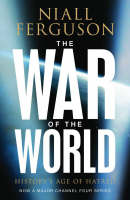
Harvard historian Niall Ferguson discusses his book "The War of the World: 20th Century Conflict and the Descent of the West"- (Sep 12, 2006 at Vanderbilt University). Listen to the podcast.
Some article by Niall- ‘The Next War of the World’, The origins of the Great War of 2007 - and how it could have been prevented, Tomorrow's world war today. See also SHORTER NIALL FERGUSON: IF WE DON'T ATTACK IRAN, THERE'LL BE NUCLEAR WAR
A panel discussion of the recent and historical conflict between Israel and Hezbollah, its effects on Lebanon and its implications for U.S. policy. Featuring Fawaz A. Gerges, professor of International and Middle Eastern Studies, Sarah Lawrence College, Michael Eisenstadt, The Washington Institute for Near East Policy, moderated by Larry P. Goodson, professor of Middle East studies, United States Army War College. Listen to the podcast.
The Wonga Coup
For more detail see this post at Pienso.
Sri Lanka; With violence once again erupting in Sri Lanka, Rear Vision traces the historical roots of the conflict. Guests include Jonathan Spencer, Professor of Anthropology of South Asia , University of Edinburgh, Dr. Jayadeva Uyangoda, Professor and Head, Department of Political Science and Public Policy, University of Colombo and Dr. Paikiasothy Saravanamuttu, Executive Director of the Centre for Policy Alternatives, an independent, nonpartisan, public policy centre with a focus on peace and governance, Colombo
Keeping the peace: the U.N. Security Council; The United Nations Security Council has finally brokered a cease-fire in Lebanon. On Rear Vision this week, a history of the UN's most powerful body.
Guests include Rosemary Righter, Associate Editor, The Times, Ian Williams, UN correspondent , The Nation, Colin Keating, Executive Director, Security Council Report, Former New Zealand UN Ambassador
See also ‘Security Council Report’ will publish, on a regular monthly basis, independent and objective information and analysis about the United Nations Security Council and the issues on its existing and future agendas.
See also this debate from BBC-to mark the end of Radio 4's This Sceptred Isle: Empire series, some of this country's best-known historians will be examining how Britain and other countries around the world have been changed by their experience of empire. They'll be discussing whether Britain should apologise and make reparation for its imperial past or glory in it, and asking whether the twenty-first century will see the birth of new empires. Eric Hobsbawm, Niall Ferguson, Robert Beckford, Linda Colley and Priya Gopal. (the program is available online)
The Hammer Against Witches

Kevin in a comment to an earlier post mentioned that ‘No bigot I have ever known was as scientistic or as vicious as the writer of this article in EB,’. I think the following book Malleus Maleficarum (1486), written as a guide to witch hunting beats the Negro definition from the Encyclopedia Britannica. The book was second only to Bible in popularity when it was published (watched the History Channel video). Some excerpts from the chapter titled; “Concerning Witches who copulate with Devils. Why is it that Women are chiefly addicted to Evil superstitions”-
“…For S. Jerome in his Contra Iouinianum says: This Socrates had two wives, whom he endured with much patience, but could not be rid of their contumelies and clamorous vituperations. So one day when they were complaining against him, he went out of the house to escape their plaguing, and sat down before the house; and the women then threw filthy water over him. But the philosopher was not disturbed by this, saying, “I knew the rain would come after the thunder.”There is also a story of a man whose wife was drowned in a river, who, when he was searching for the body to take it out of the water, walked up the stream. And when he was asked why, since heavy bodies do not rise but fall, he was searching against the current of the river, he answered: “When that woman was alive she always, both in word and deed, went contrary to my commands; therefore I am searching in the contrary direction in case even now she is dead she may preserve her contrary disposition.”
And indeed, just as through the first defect in their intelligence that are more prone to abjure the faith; so through their second defect of inordinate affections and passions they search for, brood over, and inflict various vengeances, either by witchcraft, or by some other means. Wherefore it is no wonder that so great a number of witches exist in this sex.
Women also have weak memories; and it is a natural vice in them not to be disciplined, but to follow their own impulses without any sense of what is due; this is her whole study, and all that she keeps in her memory. So Theophrastus says: If you hand over the whole management of the house to her, but reserve some minute detail to your own judgement, she will think that you are displaying a great want of faith in her, and will stir up a strife; and unless you quickly take counsel, she will prepare poison for you, and consult seers and soothsayers; and will become a witch.
But as to domination by women, hear what Cicero says in the Paradoxes. Can he be called a free man whose wife governs him, imposes laws on him, orders him, and forbids him to do what he wishes, so that he cannot and dare not deny her anything that she asks? I should call him not only a slave, but the vilest of slaves, even if he comes from the noblest family. And Seneca, in the character of the raging Medea, says: Why do you cease to follow your happy impulse; how great is that part of vengeance in which you rejoice? Where he adduces many proofs that a woman will not be governed, but will follow her own impulse even to her own destruction. In the same way we read of many woman who have killed themselves either for love or sorrow because they were unable to work their vengeance.S. Jerome, writing of Daniel, tells a story of Laodice, wife of Antiochus king of Syria; how, being jealous lest he should love his other wife, Berenice, more than her, she first caused Berenice and her daughter by Antiochus to be slain, and then poisoned herself. And why? Because she would not be governed, and would follow her own impulse. Therefore, S. John Chrysostom says not without reason: O evil worse than all evil, a wicked woman, whether she be poor or rich. For if she be the wife of a rich man, she does not cease night and day to excite her husband with hot words, to use evil blandishments and violent importunations. And if she have a poor husband she does not cease to stir him also to anger and strife. And if she be a widow, she takes it upon herself everywhere to look down on everybody, and is inflamed to all boldness by the spirit of pride.
If we inquire, we find that nearly all the kingdoms of the world have been overthrown by women. Troy, which was a prosperous kingdom, was, for the rape of one woman, Helen, destroyed, and many thousands of Greeks slain. The kingdom of the Jews suffered much misfortune and destruction through the accursed Jezebel, and her daughter Athaliah, queen of Judah, who caused her son's sons to be killed, that on their death she might reign herself; yet each of them was slain. The kingdom of the Romans endured much evil through Cleopatra, Queen of Egypt, that worst of women. And so with others. Therefore it is no wonder if the world now suffers through the malice of women.
And now let us examine the carnal desires of the body itself, whence has arise unconscionable harm to human life. Justly we may say with Cato of Utica: If the world could be rid of women, we should not be without God in our intercourse. For truly, without the wickedness of women, to say nothing of witchcraft, the world would still remain proof against innumerable dangers. Hear what Valerius said to Rufinus: You do not know that woman is the Chimaera, but it is good that you should know it; for that monster was of three forms; its face was that of a radiant and noble lion, it had the filthy belly of a goat, and it was armed with the virulent tail of a viper. And he means that a woman is beautiful to look upon, contaminating to the touch, and deadly to keep.
Let us consider another property of hers, the voice. For as she is a liar by nature, so in her speech she stings while she delights us. Wherefore her voice is like the song of the Sirens, who with their sweet melody entice the passers-by and kill them. For they kill them by emptying their purses, consuming their strength, and causing them to forsake God. Again Valerius says to Rufinus: When she speaks it is a delight which flavours the sin; the flower of love is a rose, because under its blossom there are hidden many thorns. See Proverbs v, 3-4: Her mouth is smoother than oil; that is, her speech is afterwards as bitter as absinthium. [Her throat is smoother than oil. But her end is as bitter as wormwood.]
Let us consider also her gait, posture, and habit, in which is vanity of vanities. There is no man in the world who studies so hard to please the good God as even an ordinary woman studies by her vanities to please men. An example of this is to be found in the life of Pelagia, a worldly woman who was wont to go about Antioch tired and adorned most extravagantly. A holy father, named Nonnus, saw her and began to weep, saying to his companions, that never in all his life had he used such diligence to please God; and much more he added to this effect, which is preserved in his orations.
It is this which is lamented in Ecclesiastes vii, and which the Church even now laments on account of the great multitude of witches. And I have found a woman more bitter than death, who is the hunter's snare, and her heart is a net, and her hands are bands. He that pleaseth God shall escape from her; but he that is a sinner shall be caught by her. More bitter than death, that is, than the devil: Apocalypse vi, 8, His name was Death. For though the devil tempted Eve to sin, yet Eve seduced Adam. And as the sin of Eve would not have brought death to our soul and body unless the sin had afterwards passed on to Adam, to which he was tempted by Eve, not by the devil, therefore she is more bitter than death.
More bitter than death, again, because that is natural and destroys only the body; but the sin which arose from woman destroys the soul by depriving it of grace, and delivers the body up to the punishment of sin.
More bitter than death, again, because bodily death is an open and terrible enemy, but woman is a wheedling and secret enemy.
And that she is more perilous than a snare does not speak of the snare of hunters, but of devils. For men are caught not only trough their carnal desires, when they see and hear women: for S. Bernard says: Their face is a burning wind, and their voice the hissing of serpents: but they also cast wicked spells on countless men and animals. And when it is said that her heart is a net, it speaks of the inscrutable malice which reigns in their hearts. And her hands are as bands for binding; for when they place their hands on a creature to bewitch it, then with the help of the devil, they perform their design.
To conclude. All witchcraft comes from carnal lust, which is in women insatiable. See Proverbs xxx: There are three things that are never satisfied, yea, a fourth thing which says not, It is enough; that is, the mouth of the womb. Wherefore for the sake of fulfilling their lusts they consort even with devils. More such reasons could be brought forward, but to the understanding it is sufficiently clear that it is no matter for wonder that there are more women than men found infected with the heresy of witchcraft. And in consequence of this, it is better called the heresy of witches than of wizards, since the name is taken from the more powerful party. And blessed be the Highest Who has so far preserved the male sex from so great a crime: for since He was willing to be born and to suffer for us, therefore He has granted to men the privilege.”
Related;
Sexy Devils;What really lay behind the massive witch hunts of the Middle Ages?
Witchcraft Collection- Cornell University
The massa marittima mural / the malleus maleficarum
Images of Circe and Discourses of Witchcraft, 1480-1580
History of Witchcraft - Research Guide
Multimedia;
WITCHCRAFT- BBC
"Why did practices that had been tolerated for centuries suddenly become such a threat? What brought the prosecutions of witchcraft to an end, and was there anything ever in Europe that could be truly termed as a witch?"
Listen to Helen Fisher for an intelligent discussion for some real differences between the sexes (very highly recommended).
September 12, 2006
The Seduction of Culture in German History


During the Allied bombing of German cities, Hitler was more concerned by the loss of cultural treasures than he was by human casualties. At the time, his propagandists broadcast the fact, believing it would impress the German public by revealing Hitler's cultural sensitivity: the artist's spirit inside the military uniform. Wolf Lepenies argues that this incident is part of the long German tradition of valuing cultural achievement above all else, including politics - a tradition which he believes has had a catastrophic consequences for his country. Listen to the podcast from Radio National (starts at the end of the program).
Here is the Introduction of the book;
“This book examines the German attitude of regarding culture as a substitute for politics and of vilifying politics, understood above all as parliamentary politics, as nothing but an arena of narrow-minded, interest-group bargaining and compromise. But this work is not a debate on the Sonderweg (special path) in disguise, asserting that the aversion to politics and the idealist and romantic veneration of culture were the main reason why Germany departed from the "normal" Western course of development and steered into the disaster of Nazism. I do not describe an attitude that is a uniquely German phenomenon. Still, I argue that an overestimation of cultural achievements and a "strange indifference to politics" (G.P. Gooch) nowhere played a greater role than in Germany and have nowhere else survived to the same degree. Seeing culture as a substitute for politics has remained a prevailing attitude throughout German history--from the glorious days of eighteenth- and nineteenth-century Weimar through, though now in considerably weaker form, the reunification of the two Germanys after the fall of communism. Peter Gay, Georg Mosse, Fritz Ringer, Fritz Stern, Peter Viereck, and others have explored this specific German attitude toward culture and politics. I am revisiting their arguments and try to offer new insights into an old problem. “
Also recommended;
The Wages of Destruction: The Making and the Breaking of the Nazi Economy by Adam Tooze. See reviews at Financial Times and The Guardian. Brad de Long also recommends the book.
September 10, 2006
Balancing freedom against security

Dahlia Lithwick reviews Posner’s new book;
“That is why Judge Richard Posner is such a welcome voice in the national conversation about balancing freedom against security. Posner, the brilliant and prolific federal appeals court judge, is renowned—and not always in a good way—for putting a price tag on everything. But whatever quibbles liberals may have with his law-and-economics approach to anything from rape to unwanted babies, they should celebrate the intellectual rigor he brings to the problem of civil liberties in wartime. In his new book, Not a Suicide Pact: The Constitution in a Time of National Emergency, Judge Posner approaches the wartime civil-liberties problem in precisely the manner the Bush administration will not: with a meticulous, usually dispassionate, weighing of what is gained against what is lost each time the government engages in data-mining, indefinite detentions, or the suppression of free speech…What Posner offers is the suggestion that careful balancing of liberties lost against security gained is a better alternative than the current regime that recognizes no cost to freedoms lost and no accountability for security achieved. By virtue of this careful balancing, Posner even criticizes a few Bush administration decisions. He questions, for instance, the decision to suspend the right to habeas corpus of U.S. citizens or foreign terrorists captured in the United States because he deems the cost of indefinite detention to exceed the gain in public safety.”
Related;
The Constitution is not a suicide pact
The Glenn & Helen Show: Richard Posner on Terrorism and the Constitution
Judge Posner interview Charlies Rose
September 8, 2006
Free Reads from The Economist

Free reads from latest edition of The Economist;
Climate change- The heat is on; The uncertainty surrounding climate change argues for action, not inaction. America should lead the way. Editorial on a survey of the topic.
A discussion with Emma Duncan, Deputy Editor of The Economist; “We need to think about climate change maybe as individuals think about insuring their houses: you spend maybe 1% of your annual income insuring your house not because you think it's going to burn down, but because if by any chance it did burn down, the consequences for you would be disastrous.” Listen to the podcast
Doing business; Singapore took first prize as the easiest place to do business in the World Bank's “Doing Business 2007” report. The Democratic Republic of Congo is the hardest place. Reform was the theme and Georgia the quickest reformer, leaping to 37th place in the rankings from 112th last year. China became one of the top-ten reformers by improving investor protection, cutting red tape and establishing credit history for loans
India's rupee- A disappointment for those hoping capital controls might ease soon; “THE chapter on the Fall of the Rupee you may omit,” counselled Oscar Wilde's prudish governess in “The Importance of Being Earnest”. “It is somewhat too sensational.” A new work on the rupee, in contrast, has set few pulses racing. A report by a committee set up in March by the Reserve Bank, India's central bank, to “revisit” the question of full convertibility of the currency recommends only slow change—too slow, for two of the committee's members, who have dissented from some of its cautious conclusions.
Business in Africa-Once again, Africa is listed as the most difficult place in the world to do business. So why are some businessmen happy to be there?; Foreign investors are governed by trust. India and China also rank relatively poorly in the World Bank survey, but are nonetheless investment magnets. Mr Klein argues this is because investors are confident that these countries are going in the right direction and they want to tap into their large markets early. Africa will have to prove itself through years of good performance and sustained reform before it can gain such confidence. But if it does, those who are already betting on the continent will be miles ahead.
Globalisation- Joe has another go; But if the writing is crisp, the arguments are a little soggy. Mr Stiglitz assumes the worst of markets, the best of governments—except, of course, his own. Too often, he wants to have it both ways: his distaste for the IMF has made him suspicious of all technocratic bodies, even to the point where he questions the case for independent central banks. But at the same time he wants to set up international tribunals to rule on unfair tax competition, for example, or health standards. He says that debt relief for the poorest countries is “simply a matter of accounting”, because they could not repay anyway. But he also wants to argue that the burden of red ink has crippled them.
Dismal science, dismal sentence-The efficient markets hypothesis can land you in jail
Can America's farmers be weaned from their government money?
Mexico's presidential election
Japan- The imperial imperative
Qatar-A bouncy bantam
The French presidency
Charlemagne-Europe's tentative reformers; In Germany it has long been customary for the government, in the interests of consensus politics and social stability, to give “the social partners”—the catch-all name for employers' associations, trade unions and other interest groups—special privileges when writing new laws. On occasion, governments have even asked specific groups to draft legislation. But in drawing up health-care and tax reforms, Angela Merkel's grand coalition has tried to shut health insurers and other lobby groups out of the decision-making process, refused to listen to mere objections and demanded that, if a lobby group has a criticism, it must come up with an alternative way of meeting the government's aim (one reason why the lobbies have turned on the government with offended fury). At the same time, two members of parliament who are also heads of employers' federations (and thus personify Germany's close ties between lobbies and government) have had to choose between their business jobs and their parliamentary seats. Oh, the indignity.
Bagehot-The sands run out ; Labour MPs may come to regret their attempt to force Tony Blair from office
Steve Irwin, crocodile hunter, died on September 4th, aged 44
Economic forecasts-The panel now expects America's GDP growth to slow to 2.5% in 2007, compared with August's prediction of 2.7%. The soothsayers think that the euro area will grow by 2.3% this year (up from 2.2% in August), then slow to 1.8% next year. Germany's growth in 2006 has been revised up from 1.7% to 2.0%. But Japan is now tipped to grow by 2.8%, down from August's prediction of 3.0%. The biggest upward revision is in Sweden's growth this year: it is now forecast to be 4.1%, the fastest of all the economies in the table
Cancer genetics-Variations on a theme; There are a lot more cancer genes around than were previously known
An explanation of how the Atkins diet works
A promising new artificial heart wins regulatory approval
Pluto fights back
Europe's financial sector is ill prepared for a coming upheaval
A row breaks out over the future of Japan's consumer finance
Banks in developing countries
The global housing market
Business Section; Mobile phones on planes / Pharmaceuticals / Drug patents / Viacom / Corporate corruption in Germany / Japan's basic industries / Mobile telecoms
Alan Mulally jumps from Boeing to rescue America's troubled carmaker
September 7, 2006
Good Inaugurals
The John Curtin Institute of Public Policy has just established the journal Public Policy.
Via Andrew Leigh
Good Magazine- your subscription money goes to a charity of your choosing. See Jeffrey Sachs article and their blog.
Via Pienso
September 6, 2006
A New Map of the Middle East?

An article in Armed Forces Journal suggests we need to revise the map of the of the Middle East;
“A just alignment in the region would leave Iraq's three Sunni-majority provinces as a truncated state that might eventually choose to unify with a Syria that loses its littoral to a Mediterranean-oriented Greater Lebanon: Phoenecia reborn. The Shia south of old Iraq would form the basis of an Arab Shia State rimming much of the Persian Gulf. Jordan would retain its current territory, with some southward expansion at Saudi expense. For its part, the unnatural state of Saudi Arabia would suffer as great a dismantling as Pakistan.A root cause of the broad stagnation in the Muslim world is the Saudi royal family's treatment of Mecca and Medina as their fiefdom. With Islam's holiest shrines under the police-state control of one of the world's most bigoted and oppressive regimes — a regime that commands vast, unearned oil wealth — the Saudis have been able to project their Wahhabi vision of a disciplinarian, intolerant faith far beyond their borders. The rise of the Saudis to wealth and, consequently, influence has been the worst thing to happen to the Muslim world as a whole since the time of the Prophet, and the worst thing to happen to Arabs since the Ottoman (if not the Mongol) conquest.
While non-Muslims could not effect a change in the control of Islam's holy cities, imagine how much healthier the Muslim world might become were Mecca and Medina ruled by a rotating council representative of the world's major Muslim schools and movements in an Islamic Sacred State — a sort of Muslim super-Vatican — where the future of a great faith might be debated rather than merely decreed. True justice — which we might not like — would also give Saudi Arabia's coastal oil fields to the Shia Arabs who populate that subregion, while a southeastern quadrant would go to Yemen. Confined to a rump Saudi Homelands Independent Territory around Riyadh, the House of Saud would be capable of far less mischief toward Islam and the world.
Iran, a state with madcap boundaries, would lose a great deal of territory to Unified Azerbaijan, Free Kurdistan, the Arab Shia State and Free Baluchistan, but would gain the provinces around Herat in today's Afghanistan — a region with a historical and linguistic affinity for Persia. Iran would, in effect, become an ethnic Persian state again, with the most difficult question being whether or not it should keep the port of Bandar Abbas or surrender it to the Arab Shia State.What Afghanistan would lose to Persia in the west, it would gain in the east, as Pakistan's Northwest Frontier tribes would be reunited with their Afghan brethren (the point of this exercise is not to draw maps as we would like them but as local populations would prefer them). Pakistan, another unnatural state, would also lose its Baluch territory to Free Baluchistan. The remaining "natural" Pakistan would lie entirely east of the Indus, except for a westward spur near Karachi.”
Via Cartography blog.
*I do not share the views of the author
Podcasts Carnival
Dr Karl Sauvant - World Investment Prospects to 2010: Boom or Backlash? (Radio Economics). Here is special edition of the report
Jospeh Stiglitz: making globalisation work; Nobel Prize winning economist Joseph Stiglitz has written a follow-up to his best-selling book "Globalisation and it Discontents" which looks at the current problems with globalisation and the forces of reform at work. Related posts by Tyler Cowen on Making Globalization Work, or Joe Stiglitz watch, part II and Joe Stiglitz watch
Sri Lanka; With violence once again erupting in Sri Lanka, Rear Vision traces the historical roots of the conflict. Guests include Jonathan Spencer, Professor of Anthropology of South Asia , University of Edinburgh, Dr. Jayadeva Uyangoda,Professor and Head, Department of Political Science and Public Policy, University of Colombo, Dr. Paikiasothy Saravanamuttu, Executive Director of the Centre for Policy Alternatives, an independent, nonpartisan, public policy centre with a focus on peace and governance, Colombo
Books That Shook the World - Plato's Republic
Anthony Arnove; The Logic of Withdrawal
Christopher Scanlon on The Joint Strike Fighter
Australia and the nuclear renaissance; Nuclear is back. Australia, with its abundant ore and 'good guy' status could become a key member of the uranium enricher's club. But what would the neighbours think? And how would the twin threats of weapons proliferation and waste disposal be addressed?
John Mortimer (Edinburgh International Book Festival)
Polash Larsen's review of Londonstani, by Gautam Malkani
Engineering wonders: tunnels and bridges
Over-fished or over-regulated?; According to marine biologist Dr Walter Starck, Australia has the most over-managed, heavily restricted and least productive fishery industry in the world. He'll be speaking at the upcoming Australian Environment Foundation inaugural conference. We're also joined by chair of the foundation, Don Burke, to hear why Australia needs another environment group.
Australia On The Map Part One: The Siren South; This is the first program in the Australia On The Map series, exploring early Dutch exploration of the Australian coastline. This year marks the 400th Anniversary of the first mapping of our northern coastline by Dutchman Jan Lodewijkszoon van Rosingeyn and the crew of the Duyfken
Jess Adkins has a lab full of cucumbers made of stone. They are, in fact, drill cores of corals from all over the world. He analyses these with surprising results, getting a remarkably accurate story of past climates going back thousands of years. This young professor from Caltech (the California Institute of Technology) has some amazing stories to tell of adventure and exploration
Jane Goodall is one of the best-known observers of animal behaviour. She revolutionised the field in the 1960s by watching chimpanzees in the wild. What now does she make of their relationship with humans? And what are their prospects? Will they really become extinct outside zoos within a generation?
Lee Edwards; BP now stands for Beyond Petroleum. The company says it is proud of its diversification from fossil fuels. But will solar be enough to make a difference? Dr Lee Edwards runs BP's solar research from his base in Chicago and he foresees cities which are self-reliant through the sun and alternative sources rather than through a dependence on oil. But will BP withstand competition from less green rivals?
Western Democracies and Voter Cynicism
Derek Denton: The Dawning of Consciousness
Teachers and Performance Pay
featuring Andrew Leigh, Economist,Australian National University Co-author of "How and Why has Teacher Quality Changed in Australia?"
Anyone who had a heart would know their own language; Another chance to hear virtuoso grammarian Geoff Pullum on the logic of standard English usage...as described in The Cambridge Grammar of the English Language.
Cliches: are they worthless? The poet Chris Wallace Crabbe on the brass razoos in the currency of conversation.
Climate change; Dr Barrie Pittock of the CSIRO talks about climate change and risk management and what to do about climate change
The David Hicks Case; Former attorney-general Kep Enderby QC looks at the imprisonment of David Hicks at Guantanamo Bay
Tea with Glen Matlock; The confessions of a middle aged Sex Pistol.
Michael Whelan, S.M.; He helped found Spirituality in the Pub, a network of groups across Australia that meet to discuss all kinds of spiritual issues with the aim of deepening faith and transforming lives. For Michael Whelan, a priest in the Society of Mary congregation, conversation is a vital instrument of change, and he talks about his own spiritual development away from moralism and toward mysticism
Bad Hair day: principles and politics in international cricket
Africa's struggle for political evolution
Middlebury "Symposium on Terror and Mass Media" sessisions;
Douglas Birch, Baltimore Sun Correspondent on The Politics of Terror
The Media's Role in Promoting or Fighting Terrorism
Ahmed Abdella, Senior producer and reporter for Al- Arabiyya Television
Is Terrorism Challenging Press Freedom?
Pierre-François Mourrier, director of research for the Office of the French President
Non-proliferation of Weapons of Mass Destruction
Hans Blix, Chairman of the WMDC (Weapons of Mass Destruction Commission) addresses a conference at the Fletcher School, Tufts University
James Madison and the Spirit of Republicanism
Colleen Sheehan, Villanova University
Schiavo and the Shibboleth of Privacy
Daniel N. Robinson, Oxford University; Georgetown University
John Marshall and the Myth of Marbury
Robert Lowry Clinton, Southern Illinois University-Carbondale
Lessons from the Lincoln Administration for the War on Terror
Michael Stokes Paulsen, University of Minnesota Law School, on "The Emancipation Proclamation and the Commander-in-Chief Power: Lessons from the Lincoln Administration for the War on Terror
Media Coverage of Climate Science: Broader Lessons for Science Journalism? (VIDEO)
Nature podcasts; Male infertility, Bird flu's structural secrets and silent spread, cryptic Martian spots explained, the ethics of egg donation, Warmth-seeking bees, Poincaré unpickled and more
National Geographic Podcasts, National Geographic World Talk
Scientific American podcasts, Science Talk episodes
September 5, 2006
Equality of opportunity among states
Robert H. Wad reviews Economic Justice in an Unfair World: Toward a Level Playing Field by Ethan B. Kapstein;
“Focusing on poverty is inadequate, Kapstein argues, because it does not put relations between states front and center. "It is governments," he writes, "that sign treaties and agreements, impose sanctions and boycotts, and make war and peace, and it is governments that -- for good or for bad -- are ultimately accountable for their actions at home and abroad." In other words, a theory of global distributive justice must emphasize relations between states and the kinds of economic arrangements states subscribe to. Individuals are not the only moral agents; states are also moral agents, with duties and responsibilities to one another as well as to their citizens.Kapstein's goal is to present an alternative framework of global justice, one that centers on equality of opportunity among states. He refers to this framework as "liberal internationalism" and calls for an international economic system that is "inclusive, participatory, and welfare-enhancing for all." This order, Kapstein writes, "would give the smallest and poorest states greater voice in the system than they have at present," including in the governance of international organizations.
Building on the work of the political theorist Charles Beitz, Kapstein distinguishes two different social compacts: the domestic one between a state and its citizens, which expresses a society's basic principles of economic justice, and an international one among states, which determines the context in which countries pursue their domestic compacts. Some theorists of international relations hold that relative power, especially military power, shapes the international compact entirely. But Kapstein points out that powerful states do not always operate with a bit-better-than-the-law-of-the-jungle morality. In fact, they often forgo immediate relative gains in the interest of building a system of interactions that all participants view as reasonably fair. The resulting stability of expectations brings benefits for powerful states while increasing the common good. By way of evidence, Kapstein cites studies of the Tokyo and Uruguay Rounds of trade negotiations finding that the most powerful countries did not press their full advantages. Steered by the goal of promoting greater market access for all countries, they gave up more than they got.The social arrangement that, in Kapstein's view, guarantees inclusiveness and participation and is "welfare-enhancing for all participants" is a global regime of free trade. In other words, free trade is the social arrangement that has the potential to best achieve justice in interstate relations and to fulfill each state's domestic social compact.
Kapstein believes that free trade can generate the highest attainable economic growth -- because it maximizes the scope of opportunity and equalizes opportunities for all potential participants -- and that high economic growth is good for the poor as well as the nonpoor. But he is also aware that despite the expansion of free trade, the growth rates of poor countries have not converged with those of rich countries, as free-trade advocates had predicted they would (the experiences of East Asia and, more recently, South Asia notwithstanding). Some of the continuing disparity -- owing to persistent low growth in a majority of poorer countries -- results from domestic politics and policies and from geography. But a good part, Kapstein argues, is due to the fact that rich countries have rigged the trade regime; far from being a level playing field, it is distinctly tilted against producers in poor countries…”
Via Peinso- a cool new development issues blog.
Watch or listen book event featuring Kasptein and Deepak Lal at Cato.
Related;
Excerpt from the Book, and Chapter 1 of the book
Daniel Dreszner’s short review of the book
Interesting papers by Ethan B. Kapstein;
The Economics of Young Democracies: Policies and Performance
Behavioral Foundations of Democracy and Development
The Political Economy of International Cooperation: A View From Fairness Economics
A Global Third Way Social Justice and the World Economy
Models of International Economic Justice
The Case for Open Industrial Policy- webcast of an event featuring Robert Wade
The Truth about Globalization and Inequality
Barter your Old Books with BookMooch
BookMooch- a barter system for books (via Boing Boing)
Here is their economics section.
September 4, 2006
Books, publishers and blogs
Frederic Sautet at The Austrian Economists notes that Routledge announced that 100 of their (successful) books will be published in paperback.
Related;
Blogs of publishers; Oxford University Press, MIT Press, Penn Press Log, Uni. Of California Press blog, The Chicago blog, Yale Press blog, University of Nebraska blog, Harvard Press
Miscellaneous; The Future of the Book, NPR Books, Bookslut, Searchblog, Copyfight
Google Book Search driving surfers to booksellers
Various websites where you can get online books FREE
September 1, 2006
Hail the Google Books!
“In the 1970s, the Khmer Rouge regime in Cambodia decimated cultural institutions throughout the country. Khmer Rouge fighters took over the National Library, throwing books into the street and burning them, while using the empty stacks as a pigsty. Less than 20 percent of the library-home for Cambodia’s rich cultural heritage- survived.”
- University of Michigan President Mary Sue Coleman
A new feature of the Google’s Book Search makes out-of-copyright works available for downloading and printing.
Juan Cole raises a couple of problems with Google Book project;
“One problem: I am already finding poorly done books, where every other page is blurred beyond reading. This is very bad because I don't know when it would ever be corrected, and no one would have an incentive to carry out this sort of project once Google has…A second, general problem with Google is that on the whole it is no good at searching by date. Why is that so hard to put in a search engine? Is it that programmers just don't appreciate the desirability of being able to study instances of the word "liberte" in France, 1700-1789? You can put dates in the searches, but in my experience that doesn't return satisfactory results. If Google wants the project to have maximum impact, they need to address this problem. (It would be nice to address it in their general web search engine, too. Have you ever tried to find a document put up on the Web in 1998, where you don't remember whole search strings?) Otherwise, I see a business opportunity for a historian who has good programming skills…”
Related;
Google, the Khmer Rouge and the Public Good; Mary Sue Coleman’s speech- highly recommended, gives also a history of JSTORE.
Overselling the Web: Development and the Internet- a new book that is coming up, published by a World Bank economist, Charles Kenny.
August 31, 2006
Authors, Books, Reviews, & Chapters
A collection of links on books and reviews.
Books Online
Trigonometric Delights
U.S. Trade Strategy -Free Versus Fair by Daniel W. Drezner,
Chapters Online
The Next Great Globalization: How Disadvantaged Nations Can Harness Their Financial Systems to Get Rich by Frederic S. Mishkin
Chapter 1 - THE NEXT GREAT GLOBALIZATION: A FORCE FOR GOOD?
Expert Political Judgment: How Good is It? How Can We Know? By Philip E. Tetlock
CHAPTER 1 Quantifying the Unquantifiable
John Kay review of the book
Economics and the Law, Second Edition: From Posner to Postmodernism and Beyond
By Nicholas Mercuro & Steven G. Medema
Chapter 2 CHICAGO LAW AND ECONOMICS
The State of Working America 2006/2007
Book Reviews
Reviews of Good and Plenty-The Creative Successes of American Arts Funding by Tyler Cowen at Weekly Standard and by Donald Boudreaux
Review of Claus Offe, REFLECTIONS ON AMERICA-Tocqueville, Weber and Adorno in the United States Translated by Patrick Camiller
Brain Science and the Moral Order
Interview with Mark Hauser
What Do Animals Think About Numbers?
A Universal Moral Grammer: a case for Intention Predicates, Consequence Predicates and Action Predicates?
Review of Judith Harris’ No Two Alike: Human Nature and Human Individuality
Review of ‘The White Man's Burden-Why the West's Efforts to Aid the Rest Have Done So Much Ill and So Little Good’ at IMF and CATO
Review of The Moral Consequences of Economic Growth, Benjamin M. Friedman,
Institutions and the Path to the Modern Economy: Lessons from Medieval Trade by Greif, Avner
Glyn Morgan, The Idea of a European Superstate: Public Justification and European Integration (Princeton University Press 2005), at Crooked Timber and John Quiggin
Review of Unspeak
DEEPAK LAL'S REVIVING THE INVISIBLE HAND: A REVIEW
Review of THE WAGES OF DESTRUCTION: The Making and Breaking of the Nazi Economy by Adam Tooze
Book Quotes from Fischer Black and the Revolutionary Idea of Finance by Perry Mehrling at Voluntary Exchange
Random Book Quotes at Core Economics.
Review of Mao's Last Revolution By Roderick MacFarquhar and Michael Schoenhals
Naguib Mahfouz obituary
More on Amartya Sen’s Illusions of Identity by Fazeer
‘Iraq Is Bound to Fail'
Amity Shlaes summarizes a recent Easterly paper;
“Authors Alberto Alesina and Janina Matuszeski of Harvard University and William Easterly at New York University divided countries into two categories: natural and artificial. A natural state is one defined by ethnicity and geographic features such as mountain ranges. Mountains reinforce ethnic communities -- if only by isolating them. Natural national borders would tend to be bumpy.The map of an artificial state by contrast looks like it was drawn with a ruler, which it often was. Its straight borders sometimes partition ethnic communities, placing them in two countries. Other times, they place tribes that are hostile to one another in the same nation.
Most nations have borders that are a combination of lines and bumps, so the authors developed a mathematical measure to quantify the extent of border bumpiness, which they called squiggliness. Since borders on oceans are extremely squiggly, the authors controlled for that and studied only the squiggliness of national borders with other nations. Their thesis is that it is better to be natural than artificial, and that squiggliness is good for growth and stability….
Less squiggly countries, the scholars found, generally have lower income, worse public services and higher infant mortality rates. They also found that social unrest, the sort that leads to wars, was also more frequent in unsquiggly places. The net finding, says Alesina, is that artificiality is ``correlated with bad stuff.''It turns out that squiggliness matters even among countries ranking in the middle of the squiggliness scale. ``When you move from the top quarter of squiggly countries to the bottom quarter you see a serious loss of gross domestic product,'' Matuszeski says.
There are outliers, to be sure. At No. 11, Lebanon is super squiggly, which makes the current war there seem like an anomaly. The U.S. and Canada, as stable as they come, have long straight borders and low rankings. Here the situation is different, Matuszeski says, for ``a key factor is when the border is drawn.'' If it is drawn before settlers came -- as was the case in the near-empty New World -- then trouble is less likely…
There are other aspects of the study to challenge here, starting with the choice of the word ``squiggly.'' (It turns out the scholars thought about ``wiggly,'' but felt that ``squiggly'' worked better.)
The bigger problem with the study is the circularity of the argument. The great powers of a 100 or 50 years ago drew the lines that created the colonies or satellite countries.
Britain for example arbitrarily constructed Iraq, and arbitrarily decided its size, which is a bit less than twice that of the U.S. state of Idaho.
``The worst thing that ever happened to Iraq was the invention of the straight edge,'' Easterly says. ``They took Mesopotamia and combined mutually antagonistic groups in one nation.'' Colonialism or tyranny sets trouble in motion. The lines themselves came later. …``The lesson of history is respect nationality,'' Easterly says. ``For Iraq, at the very least you want to emphasize the federalism established there and strengthen it.'' He and his partners are looking at this in a new study, on wars and squiggliness."
Related;
Engaging Fragile States- a new initiative from CGD
State-Building: Governance and World Order in the 21st Century with Francis Fukuyama
State Building and Global Development
The Failed States Index Rankings
Squiggly border theory
Count Ethnic Divisions, Not Bombs, to Tell if a Nation Will Recover From War
The J Curve: A New Way to Understand Why Nations Rise and Fall By Ian Bremmer
Postwar Economics
August 30, 2006
Markets in Everything- Slave Trade

“It took 400 years to import 12 million African slaves to the New World. In just the past 10 years 30 million people have been trafficked in SE Asia alone. The “people trade” affects at least 4 million humans valued at $10 billion a year.”- Illicit by Moises Naim
August 23rd was the International Day for the Remembrance of the Slave Trade and its Abolition
Related;
The Slave Trade map
Moisés Naím on writing ILLICIT
TRAFFICKING FROM RUSSIA & THE CIS: History & Trends
Trafficking in Persons Report
The State Department as hallway monitor
Convention for the Suppression of the Traffic in Persons and of the Exploitation of the Prostitution of Others
Trafficking in human beings-Interpol
Trafficking in human beings: Global Patterns
Multimedia
The Dark Side of Globalization
Drugs, Security, and Development
August 24, 2006
Definition of Negro

I was shocked to see the following entry for Negro from the Encyclopedia Britannica, 1798 (emphasis mine);
“NEGRO, Homo pelli nigra, a name given to a variety of the human species, who are entirely black, and are found in the Torrid zone, especially in that part of Africa which lies within the tropics. In the complexion of negroes we meet with various shades; but they likewise differ far from other men in all the features of their face. Round cheeks, high cheek-bones, a forehead somewhat elevated, a short, broad, flat nose, thick lips, small ears, ugliness, and irregularity of shape, characterize their external appearance. The negro women have the loins greatly depressed, and very large buttocks, which give the back the shape of a saddle. Vices the most notorious seem to be the portion of this unhappy race: idleness, treachery, revenge, cruelty, impudence, stealing, lying, profanity, debauchery, nastiness and intemperance, are said to have extinguished the principles of natural law, and to have silenced the reproofs of conscience. They are strangers to every sentiment of compassion, and are an awful example of the corruption of man when left to himself.”
- The History of Human Rights-From Ancient Times to the Globalization Era by Micheline R. Ishay, p.113, try Google Book Search.
Related;
Jon Stewart’s “senior black correspondent” Larry Wilmore- The Daily Show
First Chapter of Ishay’s book
Ahead of His Time -Robert Mundell
 The latest F&D magazine from the IMF is out. The focus is on demographics, it has also got a profile of Robert Mundell. Some excerpts below;
“He also stays strongly rooted in academia, much beloved by generations of students who have deeply valued how much he has been willing to give of himself to help them grow. He was a professor at the University of Chicago (where he was also Editor of the Journal of Political Economy) from 1966 to 1971—a time famous for its economic talents, including several other future Nobel Prize winners. "As a teacher, he was both stimulating and irritating," says Mussa, explaining that Mundell liked to tease his students with "intelligent questions that weren't entirely well structured and therefore didn't have clear answers." Since 1974, he has been a professor at Columbia University.
David Bloom, Harvard professor of economics and demography and a former Columbia colleague, recalls that the most interesting conversation he ever had with Mundell was about the effect of cross-country demographic imbalances (in age) on international capital flows—a topic that Mundell isn't normally associated with but finds enormously important for macroeconomic performance. In fact, Mundell developed a four-generation model that shows that if one country has a demographic shock, it creates a wave of interest rate changes that bring on, in an open economy, compensating capital movements. The model also highlights the role that the U.S. baby boom has played in U.S. balance of payments and budget deficits, as there was high demand for resources (some of which were internally generated and some of which flowed in from abroad) associated with investing in children.”
Related;
The Works of Robert Mundell
Mundell’s Home Page; some of books are being digitized like this one International Economics, Robert A. Mundell, New York: Macmillan
August 23, 2006
This and That
Some articles worth reading;
Don’t box yourself in when making decisions by John Kay
“For people in business and in financial services it might be a disturbing conclusion, but even in very simple cases, it is impossible to be certain that a particular mathematical representation of a real problem is a correct description.”
Tourists tell Britain: you’re a rip-off
Forget the World Bank, Try Wal-Mart
The American Standard of Whining by Virginia Postrel
Airports debacle worsened by greed and neglect by Joseph Stiglitz
Seven Questions: Somalia’s Struggle
Multiculturalism: unfolding tragedy of two confusions By Amartya Sen
"The history of multiculturalism offers a telling example of how bad reasoning can tie people up in terrible knots of their own making. The importance of cultural freedom, central to the dignity of all people, must be distinguished from the celebration and championing of every form of cultural inheritance, irrespective of whether the people involved would choose those particular practices given the opportunity of critical scrutiny, and given an adequate knowledge of other options and of the choices that actually exist in the society in which they live. The demands of cultural freedom include, among other priorities, the task of resisting the automatic endorsement of past traditions, when people – not excluding young people – see reason for changing their ways of living."
The 9/11 ReportA GRAPHIC ADAPTATION BY SID JACOBSON AND ERNIE COLÓN
The Preservation Paradox By Tim Harford
Iraq Runneth Over What Next? By Daniel L. Byman and Kenneth M. Pollack
"The debate is over: By any definition, Iraq is in a state of civil war. Indeed, the only thing standing between Iraq and a descent into total Bosnia-like devastation is 135,000 U.S. troops -- and even they are merely slowing the fall. The internecine conflict could easily spiral into one that threatens not only Iraq but also its neighbors throughout the oil-rich Persian Gulf region with instability, turmoil and war."
Most Expensive Rental Markets In America 2006
"As in 2005 (see " Most Expensive Rental Markets In America 2005"), the New York metropolitan area, which includes New York City and its surrounding counties, topped our list, with an average price of more than $27 per square foot for a high-end apartment.
In Manhattan specifically, the average rent came in at a whopping $48.33 per square foot--an estimate supported by July figures from Citi Habitats, a New York City-area real estate agency. The median monthly rent for a studio apartment in Manhattan is more than $1,900, according to Citi Habitats. If it's a three-bedroom spread that you're after, prepare to fork over somewhere in the neighborhood of $5,000."
Personality Traits of the Best Software Developers
Writing about your relationship could help it last
The Female Brain By Louann Brizendine-Chapter One
The Birth of the Female Brain
On the Web, Pedophiles Extend Their Reach
Sane Mutiny: The Coming Populist Revolt
August 21, 2006
The Economist advises Amazon

The latest edition of The Economist looks at the prospects of Amazon;
“Amazon's product range is expanding in much the same way as online sales are. As people become more accustomed to shopping on the internet, they are ordering a greater variety of goods and services from a wider range of websites. In America online sales were up by 25% in 2005 over the previous year, reckons Forrester, a research company. Travel is now by far the biggest category, worth some $63 billion last year, followed by computer equipment and software ($14 billion), cars ($13 billion), clothing ($11 billion) and home furnishings ($8 billion).Amazon's challengers come from two directions. First, other online retailers are growing rapidly and appear in various forms. Many of the dotcoms are invading each others' turf. From auctioning people's old stuff, eBay now also hosts fixed-priced virtual shops offering new goods for sale. And Google is adding more shopping-type services, such as Froogle, a shopping-comparison service, and more recently its new Checkout payments system, which rivals eBay's PayPal.
Second, traditional retailers are rapidly getting their online acts together. This pits Amazon against giant retailers with huge purchasing power, like America's Wal-Mart and Britain's Tesco. These “multichannel” retailers make a virtue of their ability to offer both “bricks and clicks”. Many provide online customers with the option of picking up goods from the shop down the road. This is proving popular with web buyers who want things immediately or are keen to avoid shipping costs and staying in to accept a delivery. Circuit City, a big American electricals chain, expects in-store pick-ups to account for more than half its online sales this year…
The battle for downloads is becoming more intense. The market for digital music is dominated by Apple's iTunes, which is also likely to expand into video. Microsoft is entering the music-download business with a digital player, called Zune. On August 8th Nokia bought an American digital-music distributor, Loudeye, to develop its own service for its music-enabled handsets. The Finnish telecoms-equipment company says these are now selling roughly twice as fast as Apple's iPods. Video downloads are available online from some sites, such as Movielink.com, which is owned by five big film studios. News Corp's websites, including MySpace.com, are planning to sell films and shows from the group's Fox network. …A video service could resemble a downloadable version of Netflix, a Californian company that pioneered online video rentals. Netflix's customers compile online lists of videos they want to see and receive them in the post. When the DVDs are returned in their pre-paid envelopes, the next titles are sent. With no late fees, Netflix has pummelled Blockbuster's store-based video-rental model.
Netflix is also exploring how to deliver movies online. Amazon has already copied the Netflix postal model in Britain and Germany and it has dropped hints that it may launch a postal service in America: Mr Bezos told Wired magazine last year that Amazon was well placed to do so “...and we wouldn't have to pay heavy marketing fees.” The same could be said about video downloads. Although Mr Bezos has discussed his strategy in the past with The Economist, the company did not respond to requests for an interview…
“The need to own music in a physical form, whether it's to play in other music systems, to minimise the chances of losing it or just because they like to have a physical collection, remains very strong amongst internet users,” says Alex Burmaster, the research company's European internet analyst…
a subsidiary called Amazon S3 rents out temporary storage by the terabyte to other websites…
Another Amazon subsidiary, BookSurge, is busy courting publishers to have their works scanned into digital files…
A new “e-reader” device from Sony has a special screen that mimics the way light falls on a printed page. The size of a paperback, it can store several hundred novels…
Unless the pioneer of online retailing can provide downloadable media it risks being “disintermediated”—rather as only a decade ago high-street bookshops, music and video stores were disintermediated by Amazon itself.”
My bet is on Amazon’s BookSurge.
Related;
A 2001 interview with Jeff Bezos (video)
The Future of Gadgest (video)
Communicating the Skype way
Profiting from obscurity; What the “long tail” means for the economics of e-commerce
A METHODOLOGY FOR ESTIMATING AMAZON'S LONG TAIL SALES
Interview with Chris Anderson (starts at the end of the show)
Chris Anderson and the Long Tail (Econ Talk)
Screening the Latest Bestseller
Ads Coming to Textbooks;
"Now, a small Minnesota startup is trying to shake up the status quo in the $6 billion college textbook industry. Freeload Press will offer more than 100 titles this fall _ mostly for business courses _ completely free. Students, or anyone else who fills out a five-minute survey, can download a PDF file of the book, which they can store on their hard drive and print.The model faces big obstacles. Freeload doesn't yet have a stable of well-known textbook authors across a range of subjects, and it lacks the editorial and marketing muscle of the "Big 3" textbook publishers (Thomson, Pearson, and McGraw-Hill). Its textbooks don't come with bells and whistles such as online study guides that bigger publishers have spent millions developing in order to lure professors _ who assign textbooks and are the industry's real customers."
August 20, 2006
Linguistic Abuse
 Stephen Poole, author of Unspeak,
“In December 2002, two prisoners at the US base in Bagram, Afghanistan, died after trauma to their legs of such severity that the coroners compared it to the results of being run over by a bus. The subsequent official investigation was nothing if not creative. The death of one was explained in this way:'No one blow could be determined to have caused the death,' the former senior staff lawyer at Bagram, Col. David L. Hayden, said he had been told by the Army's lead investigator. ‘It was reasonable to conclude at the time that repetitive administration of legitimate force resulted in all the injuries we saw'.
The logic of this is startling. You may compare it in some ways to the Chinese method of execution, used until 1905, known as 'death by a thousand cuts'. Since no one cut can be determined to cause death, no one is responsible for the killing. Similar is the principle behind the firing squad: everyone fires at the same time and one soldier has a blank, so no one soldier can be sure that he killed his comrade. But at least in these two cases the intention is avowedly to cause death. To use the argument as an excuse for 'accidental' extrajudicial killing is different. It is perhaps more like a sophistic application of Zeno's paradox of motion. Since at every place in the flight of an arrow it can be considered at rest, an infinite number of such points of rest cannot possibly add up to travel, so the arrow does not actually move and can never reach its target. Similarly, no number of 'legitimate' things can ever add up to something that is illegitimate. It's just one of those unfortunate things.
But this is deliberate linguistic misdirection. The insertion of the word 'legitimate' before 'force' aims exactly to pre-empt the question of legitimacy. Even if one allows that some force might be legitimate, you're dissuaded from wondering whether a repetitive sequence of legitimate blows can be illegitimate. That principle is common in other areas of law: repetitively playing your music too loud can add up to a disturbance of the peace. 'Legitimate' force also implies that the victim had been found guilty of a crime deserving of violent punishment; but the dead prisoners had never had a trial.
The argument is weak on a more physical level, too. If I tap you lightly on the head a hundred times, you may become very annoyed, but this will not add up to crushing your skull. Equally, repeated light blows to the thighs will not add up to crushing them as though you had been run over by a bus. The 'legitimate force' in these blows must in truth be fierce. And so the whole defence does nothing but beg the question of legitimacy itself.In fact the blows to the legs were not mild slaps but what's called 'peroneal strikes', a deliberately disabling strike to the side of the leg, just above the knee, which targets the peroneal nerve. One of the former police officers who trained the guards in this technique said that it would 'tear up' a prisoner's legs if used repeatedly. A military policeman at the base, Specialist Jones, testified as to how entertaining it was to brutalise a detainee in this way and hear him cry out to his god: 'It became a kind of running joke, and people kept showing up to give this detainee a common peroneal strike just to hear him scream out "Allah," he said. 'It went on over a 24-hour period, and I would think that it was over 100 strikes.'
Inflicting pain for its comic value might not be many people's idea of 'legitimate force'. By the time the man who so amused the Military Police died, most interrogators at the base had concluded that he was an innocent taxi driver.
The word 'administration', meanwhile, is another example of the bureaucratisation of the language of violence. Medicine is administered; civil government is administration. Punishment is administered only after due process. To call the beating of an unconvicted prisoner the 'administration' of force is already to approve of it, by describing it in the language of official sanction. The very phrase 'repetitive administration' is designed to coat the mind in grey cotton-wool, to conjure vistas of endless similar days in fluorescent-lit offices, and thus to mask the reality of brutal violence inflicted for sadistic enjoyment. In the end, the best translation of Colonel Hayden's words is: 'Yes, we beat these men to death, but we have determined that we had the right to do so.'
Related;
Listen to the above podcast.
Steven Poole explains his book.
Bjorn Lomborg’s false dichotomies
In U.S. Report, Brutal Details of 2 Afghan Inmates' Deaths
Army Faltered in Investigating Detainee Abuse
Two Point Scales
We must talk
Fiasco- Interview with the author (listen to his comment about one excellent senior military official named McMaster and his approach in the unit, around the middle of the program);
“I was struck at how successful the 101st Airborne was in Mosul in 2003-04. And some units showed remarkable improvement--the 3rd Armored Cavalry Regiment had a mediocre first tour of duty in Iraq, but when it went back in 2005 for a second tour, it did extremely well. Col. H.R. McMaster, the regimental commander (and author of a very good book about the Vietnam War, Dereliction of Duty) told his troops that, "Every time you disrespect an Iraqi, you are working for the enemy." I was especially struck by how his regiment handled its prisoners--it even had a program called "Ask the Customer" that quizzed detainees when they were released about whether they felt treated well. This recognized the lesson of past wars that the best way to end an insurgency is to get its leaders to put down their guns and enter the political system, and to get the rank-and-file to desert or switch sides. But it will be harder to discuss the sewage system with the new mayor next year if your troops beat him in his cell when he was your prisoner last year.”
Salon exclusive: The Abu Ghraib files
August 17, 2006
Books and Colbert
Some authors discuss their books with Colbert;
Reza Aslan, No God But God
Ron Suskind, One Percent Doctrine
Ramesh Ponnuru, author of Party of Death
On Lynne Cheyney's children’s book
August 16, 2006
The Truth about Globalization and Inequality

According to P. Sainath;
“India is a classic example of engineered inequality. On 20 October, The New York Times had a front page lead celebrating the birth of a class of people in India who spend their weekends at malls. It failed to mention that this year, India slipped three places in the human development ranking of the United Nations. We now stand at rank 127. This year’s UN Human Development Report had found that for the bulk of the Indian population, living standards are lower than those of Botswana – or even the occupied territories of Palestine. So while some of the richest people in the world live in India, so do the largest number of the world’s poor.The euphoria over one good monsoon (actually, we’ve had several these past 15 years) seems to have erased any debate in the media on what’s happening in Indian agriculture. Small farms are dying. Investment in agriculture is down. Rural credit has collapsed and debt has exploded. Many are losing their lands as a few celebrate at the malls. In March this year, as Professor Utsa Patnaik points out, the per person availability of foodgrain was lower than it had been during the notorious Bengal Famine of 1942-43.
Thousands of farmers have committed suicide since the late 1990s. In a single district of Andhra Pradesh, Anantapur, more than 2400 farmers have taken their own lives since 1997. Elsewhere in India, like in Gujarat or Mumbai, the loss of countless jobs in industry is boosting religious fundamentalism. In the 2002 violence in Gujarat in which over 1500 lives were lost, many of the rioters were workers from shut-down textile mills.
The huge new inequalities are feeding into existing ones: For instance, in a society where they are already disadvantaged, hunger hits women much harder. Millions of families are making do with less food. In the Indian family women eat last. After they have fed their husbands and children. With smaller amounts of food being left over now, poor Indian women are eating even less that they did earlier. The strain on their bodies and health becomes greater. Yet, health care is ever more expensive.”
According to Phillipe Legrain;
"Wade points out that absolute income gaps are widening and argues that this is a matter for concern. Really? Consider again his example of economy A, where the average income is $10,000, and economy B, where it is $1,000. Their relative income is 10:1 and the absolute gap between them is $9,000. Suppose B grows at a racy 10 per cent a year. Its income will rise by $100 to $1,100. If the absolute gap between A and B is not to widen, A can add at most $100 to its income of $10,000, which means growth cannot exceed 1 per cent. In short, because A starts off so much richer than B, even if B booms the absolute gap between them will initially widen unless A stagnates—and if A stagnates, B is unlikely to boom, since A’s demand for its exports will also stagnate. Perhaps Wade wants the gap between rich and poor to shrink through economic stagnation in rich countries—if so, he should say so explicitly. But surely what is happening now is preferable: rich countries are growing steadily, but poor countries are growing faster, and thus catching up in relative terms. If this continues, they will eventually narrow the absolute gap too. For example, if B grows at 10 per cent a year for 30 years, its income will rise to $17,449; while if A grows at 2 per cent a year over the same period, its income will rise to $18,114.”
Related;
What to Read: Inequality and Development in a Globalizing World- A Syllabus
Inequality Does Cause Underdevelopment
Globalisation, Inequality and Poverty Relationships: A Cross Country Evidence
The global redistribution of income
New Economist blog's posts on Inequality.
Everybody Loves a Good Drought: Stories from India’s Poorest Districts- Book Review
Multimedia;
Why Inequality Matters in a Globalizing World- Nancy Birdsall
How Unequal Can America Get Before it Snaps- Robert Reich
Economic Growth, Inequality and Poverty: Findings from a New Dataset
Perspectives on Growth, Inequality and Poverty
Poverty, Inequality and Growth in the Era of Globalization
World Inequality in the Second Half of the 20th Century
Globalization, Growth, and Poverty: Building an Inclusive World Economy
Hans Rosling at TED
Gapminder
The Globalisation of Inequality – Sainath
Amartya Sen’s Advice to Indians

Outlook India has an interview with Amartya Sen- some excerpts below (free with registration);
“The consumption pattern of urban middle-class Indians is becoming increasingly similar to their counterparts of the West. From household goods to food to cultural products, there is now a close resemblance between Indians and those in the West. Are Indians becoming increasingly similar to their counterparts in the West? If so, what are the perils of this trend?The increase in global contact and association has led to much greater homogeneity of the consumption of the rich across the world—it is not an isolated trend exclusive to India (you see it in Rio, Accra and Johannesburg as well as in Mumbai and Shanghai). This is, in a basic form, an age-old phenomenon. I have discussed in my book The Argumentative Indian how the consumption pattern of rich Indians changed in the early centuries AD, because of the trade in luxury products from China (with plentiful references in Indian literature, including Kalidasa and Bana), to Chinese silk, Chinese fruits, Chinese cosmetics used by the rich. But this is happening on a much larger scale in the contemporary world.
The basic problem is not what commodities the rich spend their money on, but that the economic gap between the rich and the poor is so large and also that it is growing (it has not grown as fast as in China, but it has certainly grown in significant ways). In fact, it is the existence and the expansion of this gap that we have to address. This may be an inevitable part of the price to pay to retain high-skill technical experts within the country and realism may well require that this connection be taken into account. But social ethics also demands that we examine—with realism but also with a sense of equity—what is really inescapable and what can be done to reduce the divergent fortunes of the rich and very rich on the one hand, and the poor and very poor on the other. This is not just a matter of the commodity pattern of the consumption of the rich.
Having said that, however, I should also mention that there is still at least one special problem in the hold of modern Western consumption patterns on the rich in India—and in other poor countries. The labour component in the production of these 'modern amenities' is often quite low in comparison with the older patterns of luxury consumption (for example, widespread services provided directly by unskilled labour), and this can have a negative effect on labour demand and through that on employment. This is not in itself a strong enough reason to curb that type of consumption through government control, but it is a reason to pay special attention to the critical role of employment generation in the process of economic development and to see what can be done to address this issue.
Even as India strives to become a global power, politically and economically its social indices remain poor. In terms of human development, India lags far behind. Has India become less caring? How does it dovetail with India's quest to become a global power? And what kind of future do you envisage for the poor as India changes?You are absolutely right to point to India's relatively poor record in human development. This is not a new phenomenon, so it is not a question of India becoming 'less caring' than in the past, but the old problem of the neglect of social facilities and of the development of human capabilities which has not been adequately addressed or removed. It is hard for me not to feel frustrated when I look at some of the things I wrote in the media in the 1950s and early 1960s—grumbling about illiteracy, lack of basic health facilities etc...they still remain relevant. I would have loved to have become a purveyor of obsolete problems, but alas these problems are not obsolete even now. More attention is certainly being paid by the present government to elementary healthcare and other basic failures in capability formation. But much more needs to be done, without shutting off other good things like the expansion of Indian industries, extension of its global economic connections, development of more technological sectors, greater attention to physical infrastructure. These too are potentially helpful developments for reducing economic deprivation, but they are not adequate in themselves in eliminating India's handicap in human development.
Post-9/11, India's democratic example has been hailed worldwide. Yet the last 10-15 years have seen the emergence of unstable polity, rise of religious fundamentalism, and the trend among lower castes to move away from mainstream parties like the Congress. What explains the strengthening of the politics of identity? Do you think this in itself is a reaction to globalisation, and the shift in our politics from concentrating on 'poor India' to 'shining India'?
This is an important subject, but I don't think it is globalisation that is the source of the problem here. Indeed, as a successful democracy, India's ability to tackle these problems demands democratic politicisation of issues of poverty and social backwardness, which is entirely compatible with a more thriving participation of India in the global world. The exploitation of divisive identities, by focusing on our contrasts and conflicts, neglecting other identities that unite people in different ways, is a phenomenon that has plagued the world persistently. The field of divisive action has changed, but the basic problem of the exploitability of one division or another—forgetting everything else—remains. World War I was fed by the division of national identities, with the British, the Germans and the French tearing each other apart. Now the most exploited source of belligerent identity is linked to religious divisions, and here, despite tendencies in that direction unleashed particularly by religious majoritarianism, India's democracy has helped to reduce and restrain the divisive exploitation of communal differences.
Indeed, in the reading of the outcome of the 2004 general elections, while there are many local factors involved, it would be hard to overlook the real presence of a general disapproval in the country of communal fanaticism (especially after what happened in Gujarat in 2002). Nor can we overlook a strong desire to reassert a commitment to the poor rather than taking the 'shining' of the middle classes to be itself adequate. More can, however, be done in these respects and they demand greater political engagement with the entire population—not just some sections of it to the exclusion of others. However, you are also absolutely right that the fragmentation of lower caste movements into divisive groups, rather than providing a united front for social equity, has been a negative influence. It is the task of the socially committed political leaders of today to focus more fully on the shared challenges of economic poverty, social deprivation, gender inequality and other defects that require a joint approach, rather than a divisive outlook that splits the deprived groups into mutually hostile segments.
To what extent is this change in perception an outcome of globalisation, where knowledge of English has become a skill that counts. A large number of Indians, even in villages, want to go through the English system of education. What do you think could be the perils of this trend?
Certainly globalisation has made English something like a lingua franca of the world. We have to accept that, without seeing globalisation and the spread of English as a necessarily problematic phenomenon. Indeed, I do not see the wide interest in learning English as a regressive force, since the use of the English language both allows India to speak to the world and serves as the medium through which Indians from across the country can share their technical knowledge and social and political dialogue. If the interest in English were to eclipse the interest in India's enormously rich languages, with its rich literature and long histories, that would be a loss, but that is not the situation now and future dangers too can be avoided through giving the issue our conscious attention. It is possible to be both interested in the richness of India's own culture and heritage and take an interest in the cultures and achievements of the rest of the world, in exactly the way that Rabindranath Tagore discussed so eloquently and convincingly. There is no necessary conflict between 'the home' and 'the world', if we continue to stand on our own feet and look at the world with interest and involvement, rather than with docility and slavishness.
What has to be watched, however, is the possibility that the role of English acts as a serious barrier for the underprivileged to get their voices heard whenever they are expressed in other languages. The linguistic divide can also contribute to the strengthening of economic divisions. These are, however, issues that can be addressed through intelligent and humane government policy, rather than our seeing them as inescapable problems that make the use of English irresistibly retrograde.
The attributes of power you'd want India to acquire?
I fear I am not a great believer in power as a source of redemption. Power is mainly the dividing line that separates the powerful from the powerless. Having been on the powerless side in the world for so long, I hope India does not get too hung up on cultivating power to be on the other side! The really important powers to acquire would come not so much from India's nuclear arsenal or missiles, but from our ability to help in solving the problems that ail the world today, which, alas, are too plentiful. We have something to offer through our experience of a working democracy (not just the rhetoric of democracy, delivered through invading armies) and sustained secularism (tested but still thriving in India), and these are not negligible issues in the thoroughly messed-up world today. If we do try to be good global players in the confused world in which we live, then a bigger global voice for India would indeed be an excellent thing.
There is a further issue about power. There is a positive role for the empowerment of the underprivileged groups within India—the landless labourers, the subjugated housewives, the economically deprived making a precarious living, the social underdogs maltreated by the privileged, and others.If we are concerned with inequality, then inequality of power must command our attention. And if a reduction of inequality of power within India is seen as making India as a whole more "powerful," then we may sensibly want "more power" in that rather special sense. We have to think more critically and more fully about exactly what powers we want, in what sense, and precisely what we want to do with power. Having more power is not a virtue in itself.”
Related;
Google has a couple of good Amartya Sen videos.
India through its calendars
Rice Trade in 16th Century Southern India
“It is worth stressing one again in the context of the south-west coast that the channels for the movement of rice, one of the more important on this circuit, were well defined. Thus, while Kanara rice found its way annually to the Persian Gulf and Muscat, not much made its way to Ceylon, except when the Portuguese Estado intervened to direct a fraction of the thither. Again, while we know of extensive trade in rice between Bengal and the Maldives, not much by way of Kanara rice, which had to travel a much shorter distance than that of Bengal, was exported to these islands. One part of the explanation lies in the re-export of Kanara rice from Malabar to the Maldives, but we must also bear in mind, besides the tastes and preferences for specific varieties, the fact that Bengal shippers and traders had a strong motivation to trade in the Maldives, given the importance of the return cargo, cauris.”
- The Political Economy of Commerce: Southern India 1500-1650 by Sanjay Subrahmanyam, pp.57-58, thanks to Google’s Book Search.
Related;
Subrahmanyam columns for Outlook India
Sanjay Subrahmanyam on Nandy: secularism, convivencia, millet system
August 15, 2006
Podcast of the Day- Patient from Hell

Climatologist Professor Stephen Schneider wrote a book called The Patient from Hell. During his treatment for lymphoma he discovered that the way doctors make decisions is seriously and deadly flawed. Listen to the podcast or see the transcript.
“Q. How does a person use a climate model to predict his own survival?
A. To start with, my wife, Terry Root, a biologist, and I went to the Internet for information. There's a lot of nonsense there, but it gave us a starting point. We then had meetings with my doctor where we'd discuss various treatment options. We used math models to argue for unusual therapies. When you're looking at global warming, climatologists don't have all the facts because certain things haven't yet occurred.
You feed information into a computer, you look to what you know and extrapolate: subjective probability analysis. For years, I have been advising governments to use it for climate change policy. That's safer than waiting for the climate system to perform the experiment on us.
Similarly, I wasn't going to wait 15 years for researchers to gather the data. I'd be dead by then.”
-From NYT interview with Stephen
August 11, 2006
Podcast of the day-Is Shakespeare still relevant ?

A panel discussion from the 8th World Shakespeare Congress, hosted by the University of Queensland, on Shakespeare's relevance to the modern world. Listen to the podcast.
Related;
A review of Shakespeare's Twenty-First Century Economics: The Morality of Love and Money;
“Turner writes, "This book makes three arguments, following Shakespeare. First, that human art, production, and exchange are a continuation of natural creativity and reproduction, not a rupture of them. Second, that our human bonds with one another, even the most ethical and personal, cannot be detached from the values and bonds of the market. And third, that there is a mysterious dispensation according to which our born condition of debt can be transformed into one of grace. These three arguments may be taken as refutations of the three reproaches to the market offered by its critics: that the market necessarily alienates us from nature, from each other, and from God." Thus the challenge of Turner's book is twofold: It invites us to rethink our view of Shakespeare, but perhaps more important, it invites us to rethink the relation of our economic to our spiritual life…
For example, Turner operates with a peculiar definition of money "as a generalized and quantified measure of the obligations that unspecified others owe me and the obligations I owe others." In a book devoted to countering Marxism, it is surprising to find a concept of money that comes perilously close to the labor theory of value. Turner's failure to understand the commodity nature of money leads him in turn to misunderstand the monetary nature of inflation, as shown by perhaps his most peculiar economic claim in the book: "A low rate of inflation is the sign that a people at large...actually trust the fairness and truthfulness of the market that gives money its value." As most reputable economists would agree, inflation is a product not of the regular functioning of the free market but of government intervention in the market: Inflation is the fall in the value of money brought about by government manipulation of currency and credit. Fortunately, Turner's occasional errors in economic theory do not invalidate his overall argument and are basically irrelevant to what he has to say about Shakespeare.”
Related
Shakespeare on the web; MIT, Google Books, Internet Public Library, BBC, Podcasts, Wikipedia
Across the blogs; Complete William Shakespeare on CD, A New “Shakespeare”, Economic History of Shakespeare, Brand Consultant, The changing value of Shakespeare
Charlie Rose interview with Harold Bloom on Shakespeare
Frederick Turner columns at TCS
War Then and Now
From General Patton’s biography ‘General Patton: A Soldier's Life’, p.278;
“..One of the things he did was to read the Koran. He wanted to get some insight into the character of the native Moroccan population.” Reading the Koran, Patton became especially concerned, because he feared some of the invading troops would have to pass through and desecrate a burial ground. This act might arouse the native population, something Patton wished to avoid.”
Here is a General today.
Related;
Senator Clinton questioning Rumsfeld
August 8, 2006
The Vanity of Breast-Feeding

“At the same time, a fashion for breast-feeding took hold among high-society women, a group who had never before concerned themselves with babies who now insisted on suckling their infants in order to fit in with progressive notions regarding motherhood. Women who hardly knew where the nursery was in their own house began compulsively exposing their breasts, often between courses of luncheons and dinners. Once again, the cartoonists stepped in to call for moderation.”
-Alain de Botton, Status Anxiety, pp. 164-166
In some cultures, the artists’ role is still very controversial. Fashions and fads need to be seen within the broad context of time and phase of the society.
* The picture above, A fashionable mother breastfeeding her baby, Coloured etching by James Gillray, English, 1796; James Gillray is best known for biting political satires, but in this piece he pokes fun at a fashionable society woman, fully dressed for an evening out. This 'fashionable mamma' is wearing a dress with slits across the breast so that she can feed her baby before she dashes off to the carriage waiting outside. This mamma is fashionable because, instead of following the earlier 18th-century practice of farming babies out to professional 'wet-nurses', she is following Jean-Jacques Rousseau's fashionable theories of a "return to nature" and is breast-feeding the baby herself.
Related;
The Cartoonist’s Responsibility
David Warsh, in a review of Vanity of the Philosopher; The "Vanity of the Philosopher": From Equality to Hierarchy in Post-Classical Economics by Sandra Peart and David M. Levy
“Their title comes from a passage in The Wealth of Nations in which Adam Smith asserts that the difference between the most dissimilar characters -- between, for example, a philosopher and a common street porter -- arises less from nature than from "habit, custom and education." For their first six or eight years, any two youths are likely to remain pretty much alike, Smith writes. But as they begin to go to work, they grow more and more different in their skills, "till at last the vanity of the philosopher is willing to acknowledge scarce any resemblance."…In keeping with the spirit of the age of democratic revolutions, the classical economists presumed a high degree of equality among human beings. From Adam Smith to John Stuart Mill, the classicals rejected race and genetic endowment as factors that might determine the differences among nations, took for granted a certain human homogeneity with respect to the taste for commerce, and focused on the role of institutions instead. The classical system of "analytical homogeneity," according to Peart and Levy, was one in which everyone counted equally and was presumed equally capable of making decisions about their own welfare.
No sooner had the nineteenth century begun, however, than systems of "analytical hierarchy," emphasizing human heterogeneity, re-entered the debate in new and "scientific" forms. These inevitably argued that some groups were privileged over others, usually along lines of race or capability. Such doctrines dated back to Plato, the authors say; it was he who famously asked, Why it was we breed cattle but not people? The tacit presupposition of this question -- that there must be philosophical experts who in their wisdom differ fundamentally from human "cattle: -- would take many forms during the coming decades, the authors write. In the mid-nineteenth century, it flared up first as a debate over slavery”
One Percent Doctrine in Real Life
John Allen Paulos column on the One Percent Doctrine;
“…Suskind describes the Cheney doctrine as follows: "Even if there's just a 1 percent chance of the unimaginable coming due, act as if it is a certainty. It's not about 'our analysis,' as Cheney said. It's about 'our response.' … Justified or not, fact-based or not, 'our response' is what matters. As to 'evidence,' the bar was set so low that the word itself almost didn't apply."…Imagine what would happen in various everyday situations were the Cheney doctrine to be applied. A young man is in a bar and another man gives him a hard stare. If the young Cheneyite feels threatened and believes the probability to be at least 1 percent that the other man will shoot him, then he has a right to preemptively shoot him in "self-defense."
Or an older woman visits her Cheneyite doctor who, finding that the woman has suffered from a sore throat and fatigue for months, orders that she be put on chemotherapy since the likelihood of cancer is in his opinion at least 1 percent. Further tests, he might argue, would take too long.
A Cheneyite gambler would be a casino's dream. The chance of rolling a 12 with a pair of dice, for example, is 1/36, almost 3 percent, and hence would justify the gambler betting his house on rolling a 12.
And what about a Cheneyite scientist, hard as that may be to conceive? If this scientist decided that the "evidence" for some crackpot scientific theory suggested to him that its probability were at least 1 percent, the scientist would feel comfortable touting it as a reasonable alternative to established theory."
"Needless to say, standards for action or decision are generally far more stringent. For a conventional scientist running a statistical test of a hypothesis the threshold is usually 95 percent, not 1 percent. More precisely, if the scientist runs the test, and obtains, based on the tentative assumption of the hypothesis, an outcome having a probability of less than 5 percent, then he or she generally rejects the hypothesis.And certainly in criminal trials the statistical burden is much greater; it's beyond a reasonable doubt (that is, an indeterminate, but very high probability), not 1 percent. In civil cases the probability standard is lower, but still nowhere near 1 percent….
Nor do they need consistency. A companion to the Cheney 1 percent action doctrine (if the probability is at least 1 percent, act) is the administration's non-action doctrine (if the probability is less than 99 percent, then don't act). This latter doctrine is generally invoked in discussions of global warming, where it seems absolute certainty is required to justify any significant action. Ideology determines which of these two inconsistent doctrines to invoke...”
Related;
Blogs discussing the book; Brad De Long, Kevin Drum, Mathew Yglesias, Tom Tomorrow, Radio Free Newport, Sunstein, Jon Swift
Compare with Robert Rubin’s style of thinking
Multimedia
Suskind with Charlie Rose, Colbert, Democracy Now, CNN
Podcast of the pressentation at the University of Virginia, Miller Center of Public Affairs
August 7, 2006
Podcasts of the Day- Amartya Sen and Morality
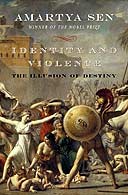
Amartya Sen talks about his new book, Identity and Violence: The Illusion of Destiny- via a cool economics blog, Endogenous preferences, by an economist at University of Helsinki.
What is Morality?; Is morality about what we do or who we are? Should we try to do the right thing or should we try to be the sort of person who does the right thing - and what's the difference? Podcast from Radio National’s Philosophers Zone.
Related;
Identity and Violence – Amartya Sen
More on 'Identity and Violence'
“It is good to be an economist, it is better to be a social scientist”

Richard Easterlin’s book The Reluctant Economist should be more widely read; some excerpts from the first chapter (emphasis mine) -
“Economic theory, as taught to undergraduate and graduate students, starts from the assumption that preferences are given and unchanging. Yet a little reflection by economists on their graduate school experience should disabuse them of this notion. Graduate school not only teaches subject matter but also the values of the economics profession – what are the important subjects of economic research, what is the status hierarchy of the profession, which individuals are the proper role models. Graduate training is indoctrination (Klamer and Colander 1990; Reder 1999)…I took two courses from Kuznets, one in statistics, which chiefly conveyed a strong skepticism toward the field and urged the use of simple, understandable methods, and one in economic development, which was essentially a course in general economic history. This development course, too, transmitted a strong sense of skepticism, not, however, toward economic history but toward economic theory. Kuznets’s basic point was simple: the “givens” of economics – technology, tastes, and institutions – are the key actors in historical change, and hence most economic theory has, at best, only limited relevance to understanding long-term change. In Kuznets’s view, what was then called “development theory” – even the widely hailed work of Schumpeter – lacked concrete empirical reference.
I was impressed by Kuznets’s intellect, as were graduate economics students generally, but these courses did not make me into a Kuznetsian. Rather, it was chiefly what Kuznets wrote. As a graduate student, I collaborated on several studies of national income with Raymond T. Bowman, the economics department chairman and a great admirer of Kuznets. Thanks largely to Bowman’s urging, I also did a thesis under Kuznets’s direction on conceptual aspects of the measurement of economic growth. As a result of these two lines of work, I read virtually everything Kuznets had written on national income and economic growth. It was this reading that demonstrated for me the scope, depth, and brilliance of Kuznets’s mind.
Kuznets believed that insight into other times and places started not from economic theory but from knowledge of the facts – especially quantitative facts. It is typical of Kuznets that one of his rare speculative pieces, “Towards a Theory of Economic Growth,” is mostly devoted to summarizing the facts that growth theory must explain. In the present age of endogenous technical change and the “new” growth theory, this article remains well worth reading (Kuznets 1955, see also Kuznets 1966).
Kuznets also believed that it is important to know the scholarly literature of specialists in the study of other times and places. As work on my dissertation led to a growing interest in economic development and away from macroeconomic policy, Kuznets channeled me into an interdisciplinary seminar on South Asia, where I came into contact with scholars doing humanistic and social science research on India and came to know some leading Indian scholars such as N. V. Sovani. Kuznets also encouraged my tutelage in the literature of economic history by Daniel Thorner, who was himself an eminent scholar of Indian economic history…This three-year project affected my development in two ways. For one thing, it gave me my first practical experience in economic measurement. I learned firsthand what had already been clear from Kuznets’s writings: that there is no measurement without theory (Kuznets 1948a, b). I also came to respect the mission of the NBER as originally conceived by Mitchell. This was to build a broad quantitative base of economic measures that would further the “cumulation of economic knowledge” (Burns 1948; Kuznets 1947, 33–4). In my personal experience, the value of this philosophy is demonstrated by the fact that, in economic history, the most often cited work of mine is still my estimates of state income done in the 1950s as part of the Kuznets–Thomas project.
But these notions about the importance of economic measurement ran strongly against the tide of mainstream economics. I can still remember the shock and sense of betrayal I felt one day when economic theorist George Stigler, himself an NBER staff member and eventual Nobel laureate, opined that a doctoral dissertation providing historical estimates of the U.S. balance of payments was not appropriate for a Columbia University Ph.D. in economics….
But economics alone is not enough -- and this is why I am a reluctant economist. We cannot comprehend the world about us without knowledge of the facts and insights provided by the other social sciences. Economics is a starting point, but only a starting point, in the application of social science to the world’s problems. As I reflect on my own philosophy, instilled by Kuznets and molded by experience, it boils down to a few words -- it is good to be an economist, it is better to be a social scientist.”
Related;
"The Story of a Reluctant Economist” in Michael Szenberg and Lall Ramrattan (eds.), Reflections of Eminent Economists.
Why Isn't the Whole World Developed?
"The Economics of Happiness,” Daedalus, 2004
Some Blog coverage of writings by Easterlin; Aplia Econ Blog, Environmental Economics, Canadian Scorecard Weblog, Economics Unbound, The Fly Bottle, Happiness and Public Policy
On Kuznets; from Econlib, Biographical Memoir of Kuznets
*Somebody needs to expand the Wikipedia article on Kuznets. I also checked the Google Book search and Amazon search inside the book on The Reluctant Economist; it seems to me that the Amazon is the better one, with Google being more restricted.
August 6, 2006
Peak Oil Theory of the war on Lebanon
 Juan Cole tries a ‘thought experiment’ to explain the US support for the Israeli war on Lebanon;
“I've had a message from a European reader that leads me to consider a Peak Oil Theory of the US-Israeli war on Lebanon (and by proxy on Iran). I say, "consider" the "theory" because this is a thought experiment. I put it on the table to see if it can be knocked down, the way you would preliminary hypotheses in a science experiment…The regime in Iran has not gone away despite decades of hostility toward it by Washington, and despite the latter's policy of "containment." As a result, US petroleum corporations are denied significant opportunities for investment in the Iranian petroleum sector. Worse, Iran has made a big energy deal with China and is negotiating with India. As those two countries emerge as the superpowers of the 21st century, they will attempt to lock up Gulf petroleum and gas in proprietary contracts.
(Since it is already coming up in the comments, I should note that the "fungibility" (easy exchange) of oil is less important in the new environment than it used to be. US petroleum companies would like to go back to actually owning fields in the Middle East, since there are big profits to be made if you get to decide when you take it out of the ground. As Chinese and Indian competition for the increasingly scarce resource heats up, exclusive contracts will be struck. When I floated the fungibility of petroleum as a reason for which the Iraq War could not be only about oil, at a talk at Columbia's Earth Institute last year, Jeffrey Sachs surprised me by disagreeing with me. In our new environment, oil is becoming a commodity over which it really does make sense to fight for control.)…
In a worst case scenario, Washington would like to retain the option of military action against Iran, so as to gain access to its resources and deny them to rivals. If Iran gets a nuclear weapon, however, that option will be foreclosed. Iran may not be trying for a weapon, and if it is, it could not get one before about 2016. But if it had a nuclear weapon, it would be off limits to US attack, and its anti-American regime could not only lock up Iranian gas and oil for the rest of the century by making sweetheart deals with China. It also might begin to exercise a sway over the small energy-producing countries of the Middle East. (The oil interest would explain the mystery of why Washington just does not care that Pakistan has the Bomb; Pakistan has nothing Washington wants and so there was no need to preserve the military option in its regard.)…
Even an Iranian nuke, of course, would not be an immediate threat to the US, in the absence of ICBMs. But the major US ally in the Middle East, Israel, would be vulnerable to a retaliatory Iranian strike if the US took military action against Iran in order to overthrow the regime and gain the proprietary deals for themselves.In the short term, Iran was protected by another ace in the hole. It had a client in the Levant, Lebanon's Hizbullah, and had given it a few silkworm rockets, which could theoretically hit Israeli nuclear and chemical facilities. Hizbullah increasingly organizes the Lebanese Shiites, and the Lebanese Shiites will in the next ten to twenty years emerge as a majority in Lebanon, giving Iran a commercial hub on the Mediterranean.
China and India could get Iran, and Iran could get Lebanon, and as non-OPEC energy production decreases, the US and Israel could find themselves out in the cold on the energy front….
It may be that that hawks are thinking this way: Destroy Lebanon, and destroy Hizbullah, and you reduce Iran's strategic depth. Destroy the Iranian nuclear program and you leave it helpless and vulnerable to having done to it what the Israelis did to Lebanon. You leave it vulnerable to regime change, and a dragooning of Iran back into the US sphere of influence, denying it to China and assuring its 500 tcf of natural gas to US corporations. You also politically reorient the entire Gulf, with both Saddam and Khamenei gone, toward the United States. Voila, you avoid peak oil problems in the US until a technological fix can be found, and you avoid a situation where China and India have special access to Iran and the Gulf.
The second American Century ensues. The "New Middle East" means the "American Middle East."
And it all starts with the destruction of Lebanon.
More wars to come, in this scenario, since hitting Lebanon was like hitting a politician's bodyguard. You don't kill a bodyguard just to kill the bodyguard. It is phase I of a bigger operation….”
Related;
Colbert on One Percent Doctrine
August 5, 2006
‘Free the Curricula, Free the Textbooks’- A Wikiality?
Two articles on the history of Wikipedia via Marginal Revolution; The Hive and Can Wikipedia conquer expertise?
Another explanation from The Economist;
“This success has made Wikipedia the most famous example of a wider wiki phenomenon. Wikis are web pages that allow anybody who is allowed to log into them to change them. In Wikipedia's case, that happens to be anybody at all. The word “wiki” comes from the Hawaiian word for “quick”, but also stands for “what I know is...”. Wikis are thus the purest form of participatory creativity and intellectual sharing, and represent “a socialisation of expertise”, as David Weinberger, who is currently writing a book on collaborative intelligence, puts it.Among the new media, wikis are the perfect complement to blogs. Whereas blogs contain the unedited, opinionated voice of one person, wikis explicitly and literally allow groups of people to get on the proverbial “same page”. This is the main reason for the failure of a Los Angeles Times experiment with wikitorials, described in the previous article. Wikis are good at summarising debates, but they are ill-suited for biased opinion.”
Here’s Colbert’s attempt at explaining the Wikipedia; see also this video.
The major innovation I’m looking forward is when the Wikibooks gets a real take off- I don’t think it’s wikiality!
Related Links;
Best coverage of the Wikipedia amongst the blogs is at at Ross Mayfield’s Weblog.
Wikimania 2006: Opening Session with Jimmy Wales
Ten - or maybe a dozen - Things that Will Be Free
Internet encyclopaedias go head to head; Jimmy Wales' Wikipedia comes close to Britannica in terms of the accuracy of its science entries, a Nature investigation finds.
A couple of interesting posts by John Quiggin; Wikipedia and Sausages, Wikipedia-economics-category-project, When co-operation trumps competition
Multimedia;
Digital Maoism; here is the transcript.
Interviews from a Survey of New Media in The Economist; Andreas Kluth, technology correspondent
David Sifry, Founder and CEO, Technorati
Chris Anderson, Editor-in-Chief of Wired
Jerry Michalski, founder and president of Sociate
Paul Saffo, Director, Institute for the future
Researching with Wikipedia- introductory videos
Brion Vibber has worked on MediaWiki and Wikipedia's; an engineers view
Somebody Not Happy with Wikipedia
August 2, 2006
Iraq Quote of the Day
 "President George W. Bush's decision to invade Iraq in 2003 ultimately may come to be seen as one of the most profligate actions in the history of American foreign policy. The consequences of his choice won't be clear for decades, but it already is abundantly apparent in mid-2006 that the US government went to war in Iraq with scant solid international support and on the basis of incorrect information -- about weapons of mass destruction and a supposed nexus between Saddam Hussein and Al Qaeda's terrorism -- and then occupied the country negligently. Thousands of US troops and an untold number of Iraqis have died. Hundreds of billions of dollars have been spent, many of them squandered. Democracy may yet come to Iraq and the region, but so too may civil war or a regional conflagration, which in turn could lead to spiraling oil prices and a global economic shock."
- Thomas Ricks, Fiasco: The American Military Adventure in Iraq, via David Warsh
A review of the book from NYT.
Identity and Violence – Amartya Sen
Prospect magazine reviews Amartya Sen’s latest book;
“At the heart of the book is an argument against what Sen calls the communitarian view of identity—the belief that identity is something to be "discovered" rather than chosen. "There is a certain way of being human that is my way," the Canadian philosopher Charles Taylor wrote in his much-discussed essay "The Politics of Recognition." "I am called upon to live my life in this way." But who does the calling? Seemingly the identity itself. For Taylor, as for many communitarians, identity appears to come first, with the human actor following in its shadow. Or, as the philosopher John Gray has put it, identities are "a matter of fate, not choice."Sen will have none of it. "There are two issues here," he says when I meet him at King's College, Cambridge, where he was master until returning to Harvard two years ago. "First, the recognition that identities are robustly plural and the importance of one identity need not obliterate another. And second, that a person has to make choices about what relative importance to attach, in a particular context, to their divergent loyalties and identities. The individual belongs to many different groups and it's up to him or her to decide which of those groups he or she would like to give priority to." We are multitudes and we can choose among our multitudes.
Sen is particularly critical of the ways in which communitarian notions of identity have found their way into social policy, especially through the ideas of multiculturalism, and in so doing have diminished the scope for individual freedom. "I am not opposed to multiculturalism," he says. "But I am opposed to the way it has been interpreted. There are two basically distinct approaches to multiculturalism. One concentrates on the promotion of diversity as a value in itself. The other focuses on the freedom of reasoning and decision-making, and celebrates cultural diversity to the extent that it is freely chosen. The way that British authorities have interpreted multiculturalism has very much undermined individual freedom. A British Muslim is not asked to act within the civil society or the political arena but as a Muslim. His British identity has to be mediated by his community."What policymakers have created in Britain, Sen suggests, is not multiculturalism but "plural monoculturalism," a system in which people are constantly herded into different identity pens. "Take the case of the Bangladeshis," says Sen. "Bangladesh's separation from Pakistan was not based on their religion but on their language, their literature and their secular politics. At the time of independence Bangladeshis who came here had a very strong sense of Bengali identity. But all that disappeared, because the official government classification ignored language, culture and secular politics, and insisted on viewing all Bangladeshis as Muslims. Suddenly they had lost all identity other than being Islamic. And suddenly Bangladeshis stopped being Bangladeshis and were merged with all other Muslims from Morocco to Indonesia."
"We have a system in which Muslim organisations are in charge of all Muslims, Hindu organisations in charge of all Hindus, Jewish organisations in charge of all Jews and so on." This parcelling out of the nation can only weaken civil society. "In downplaying political and social identities, as opposed to religious identities, the government has weakened civil society precisely when there is a great need to strengthen it."
Related;
See a video presentation on the book at World Bank
Amartya Sen and the War on Terrorism
Amartya Sen: "Identity and Violence"
There are some who allege that Sen abused Indian History- Nimai Mehta, "Truth Before Sympathy: The Use and Abuse of Indian History from Mill to Sen"
July 31, 2006
Efficient Rent Seeking and Economic Development
 I recently asked a South Korean professor about the reason for the economic success of Korea. He said efficient rent-seeking and suggested the following book;
Rents, Rent-Seeking and Economic Development: Theory and Evidence in Asia by Mushtaq H. Khan (Editor), Kwame Sundaram Jomo (Editor)
Related; Chapters 1 and 2 are online.
July 26, 2006
Demotivator of the Day- Happiness is a delusion

Psychoanalyst Adam Phillips is interviewed by The Guardian- some quotes below;
"A culture that is obsessed with happiness must really be in despair, mustn't it? Otherwise why would anybody be bothered about it at all?""It's become a preoccupation because there's so much unhappiness. The idea that if you just reiterate the word enough and we'll all cheer up is preposterous."
"I don't want happiness to be part of the currency," he sighs, "but by that I don't mean that I want people to be miserable, but I do think that if you have a sense of reality you are going to be really troubled. Anybody in this culture who watches the news and can be happy - there's something wrong with them.
"The cultural demand now is be happy, or enjoy yourself, or succeed. You have to sacrifice your unhappiness and your critique of the values you're supposed to be taking on. You're supposed to go: 'Happiness! Yes, that's all I want!' But what about justice or reality or ruthlessness - or whatever my preferred thing is?" ..
"It's very simple. The reason that there are so many depressed people is that life is so depressing for many people. It's not a mystery. There is a presumption that there is a weakness in the people who are depressed or a weakness on the part of scientific research and one of these two groups has got to pull its socks up. Scientists have got to get better and find us a drug and the depressed have got to stop malingering. The ethos is: 'Actually life is wonderful, great - get out there!' That's totally unrealistic and it's bound to fail."
Related;
The New Statesman Profile - Adam Phillips
Excerpt from ‘Going Sane-Maps of Happiness’ by Adam Phillips
July 20, 2006
Finding ‘needles of good design in haystacks of possibility’
“The Mecca of the economist lies in economic biology rather than in economic dynamics” – Alfred Marshall
Should economists use more evolutionary principles? According Eric Beinhocker, of the McKinsey Global Institute, author of the recent “The Origin of Wealth: Evolution, Complexity, and the Radical Remaking of Economics”, it’s a definite yes. The Economist reviews his book;
“The evolutionary formula—variation, selection and replication—is a formal, “all-purpose” principle, which can perform its magic equally well in either domain….He argues that economists should abandon blackboard deduction in favour of computer simulation. The economists he likes do not “solve” models of the economy—deducing the prices and quantities that will prevail in equilibrium—rather they grow them “in silico”, as he puts it.
An early example is the sugarscape simulation done in 1995 by Joshua Epstein and Robert Axtell, of the Brookings Institution. On a computer-generated landscape, studded with “sugar” mountains, they scattered a variety of simple, sugar-eating creatures, which compete for this precious commodity. Some creatures move faster than others, some see farther, and some burn sugar at a higher metabolic rate than their rivals…
Surprisingly, the results of their myopic lives can be gripping. Even simple rules of behaviour result in collective patterns that are impossible to foresee yet easy to recognise. The sugarscape, for example, is quickly beset by a division between haves and have-nots, which bears a strong statistical resemblance to the distribution of income in real economies. These macro-results cannot be deduced from the micro-rules simulators write. Rather, they emerge from the interactions of the creatures in the model, just as “wetness” emerges from the interaction of water molecules, rather than being a property of the molecule itself…”
I’ll wait for a review by David Warsh before buying the book.
Related;
The Power of Biobabble
Creating Strategy in an Unknowable Universe
STRATEGY FORMULATION "IN AN UNKNOWABLE UNIVERSE"
The adaptable corporation
Strategy as a Portfolio of Experiments
Also in the latest Economist, special report on “Japan's economy; As Japan emerges from an era of a zero interest rate, the country still needs to put more of its past behind it”
July 19, 2006
Podcast of the Day- A Guide to Nonsense

British author and journalist Francis Wheen discusses his book, How Mumbo-Jumbo Conquered the World, with some entertaining examples of celebrities like Princess Diana, Cherie Blair and Hillary Clinton who are deluded by crystals and healing stones, cults, gurus and other quackery in what he calls our post-political era. Here is the podcast, and the transcript.
Related;
Writer's choice 1: Francis Wheen at Normblog
Reviews of the book; Crooked Timber, The Economist
Break It Up

“There is no good solution to the mess in Iraq. The country has broken up. The United States cannot put it back together again and cannot stop the civil war.
The conventional wisdom holds that Iraq’s break-up would be destabilising and should be avoided at all costs. Looking at Iraq’s dismal history since Britain cobbled it together from three Ottoman provinces at the end of the first world war, it should be apparent that it is the effort to hold Iraq together that has been destabilising.
Pursuit of a coerced unity under Sunni-Arab domination — from the first British-installed king to the end of the Saddam Hussein dictatorship in 2003 — has led to endless violence, repression and genocide.
I do not believe it is possible in the long run to force people living in a geographically defined area to remain part of a state against their will. Certainly Iraq’s Kurds will never reconcile themselves to being part of Iraq. Under these circumstances I believe that a managed amicable divorce is in the best interests of the peoples of Iraq and will hasten American and British withdrawal.”
So writes Peter Galbraith in his new book, "The End of Iraq: How American Incompetence Created a War Without End"
Related;
How to Get Out of Iraq by Peter Galbraith
The Breakup- Q&A with Galbraith
The Battle in Baghdad
Krepinevich: U.S. Military May Remain in Iraq for Decades (podcast)
June 24, 2006
The Future of Aid

“The curious task of economics is to demonstrate to men how little they really know about what they imagine they can design.” - Fredrick Hayek, 1988
The plenary session of the WIDER conference on Aid is available online. My recommendations are Easterly’s presentation and that of Peter Heller.
Easterly’s presentation is almost the same as his discussion at CGD recently.
Related;
The Future of Aid – presentation by Richard Manning, Head of DAC, OECD.
The End of Poverty- a profile of Jaffrey Sachs
The Man Without a Plan- a review of Easterly’s book by Amartya Sen
Foreign aid face-off; Can we end poverty with wads of cash?
Earlier blog posts; A Shocking Fact about Sub-Saharan Africa, Removing binding constraints to growth?
June 22, 2006
Podcast of the Day- The Nanny Nation
A discussion about the proliferation of state regulation. Can't eat this, can't stand there, can't say that. Is the state meant to decide it all for us? Are we handing over too much, too willingly or are we happy having a big nanny? Participated by the following;
Ross Homel; Head of Criminology and Criminal Justice at Griffith University; Homel's 'Pathways to Prevention' work won the 2004 National Violence Prevention Award.
Elspeth Probyn; Chair of Gender and Cultural Studies at the University of Sydney; columnist with The Australian newspaper; author of 'Blush: Faces of Shame, Sexing the Self and Carnal Appetites'.
Andrew Leigh; Lawyer, political adviser, author, economist; currently with the Research School of Social Sciences, ANU; co-author of 'Imagining Australia: Ideas for Our Future'
I liked the suggestion made by one questioner that we have to pass a law making common sense compulsory.
Related;
See more downloads from the Ideas Festival
As if children mattered …I can do no better here than to summarise some of the key points that the famous American developmental psychologist Urie Bronfenbrenner made in a lecture I heard him give in Sydney exactly 25 years ago – a quarter century ago, but with ideas and research findings as applicable today as they were then.
Michael Burleigh on Political Religion; Nazism, Communism and even the French Revolution are clear examples of political movements that aroused 'religious' zeal and made absolutist claims. English historian Michael Burleigh is a critic of extremist movements of the Right and the Left and he joins Rachael Kohn to discuss political religion. Recorded at the 2006 Sydney Writers Festival.
Drug regulation and drug safety; Today a special feature about the regulation of drugs and drug safety. We'll hear from two leading critics of the American system, particularly how the US Food and Drug Administration approves new drugs for release. Norman Swan also talks with an Australian expert about the situation here in this country.
Islam, America and other free reads from The Economist

Islam, America and Europe; Why so many Muslims find it easier to be American than to feel European; The difference between America and Europe in dealing with Islam reaches down to some basic questions of principle, such as the limits of free speech and free behaviour. America's political culture places huge importance on the right to religious difference, including the right to displays of faith which others might consider eccentric. In the words of Reza Aslan, a popular Iranian-American writer on Islam, “Americans are used to exuberant displays of religiosity.” So the daily prostrations of a devout Muslim are less shocking to an American than to a lukewarm European Christian. American society is open to religious arguments—and to new approaches to old theological questions—in a way that Europe is not.
The West and Islam; Tales from Eurabia
How to save the world- Bolton v Gore; A question of priorities: hunger and disease or climate change?
Africa's economy; A glimmer of light at last? Nor have Africa's faster-growing economies done much yet for Africa's millions of poor; about half of sub-Saharan Africa's 750m-plus people still live on less than a dollar a day, a figure that has been pretty static since 1990, whereas in South Asia it dropped from 39% in 1990 to 30% in 2001 and is dropping further, while in eastern Asia (mainly China) it fell from 33% to 17% in the same period and is now falling faster still. Most foreign investment in Africa still goes to oilfields or mines, rather than factories, services or farming. Mineral riches provide governments with cash but do not create many jobs. Most people in Africa still work in the informal sector, while unemployment is rife. With a few exceptions in Africa, private business, especially the job-creating small and medium sort, is weak. Even South Africa, with its diverse economy, has failed to create jobs fast enough: at least a quarter of its people have no work.
Face value- Bill Gates replaces himself as Microsoft's software boss with Ray Ozzie; The first signal that Mr Gates had tapped Mr Ozzie to lead Microsoft into this new world of internet services and advertising came last October, when Mr Ozzie, rather than Mr Gates, wrote a lengthy internal memo called “the internet services disruption”. In it, Mr Ozzie politely but ruthlessly analysed how Microsoft had wasted opportunities to come to grips with the new environment, how it was losing ground to rivals (“Google is obviously the most visible here”) and what it would take to avoid disruption
Brazil's elections; An outsider with a (slight) chance
China's next building site; Building the nation
German history; Still haunted by a communist spectre
Prisons; The British government has been accused of both stuffing prisons and letting too many convicts out. Oddly, both accusations are true
Newspapers; The Tribune Company is in trouble with some powerful shareholders
Chinese tourism; Last year more than 31m Chinese travelled outside mainland China and the World Tourism Organisation expects this number to grow to 50m by 2010 and 100m by 2020
American inflation; The problem is that the Fed's stern talk may backfire. The statistical nuances of owners' equivalent rent suggest that core inflation may rise further and will remain above Mr Bernanke's boundaries for the rest of the year, even as the economy slows. If they are to avoid pushing up interest rates too far, Fed officials may soon have to explain why figures they now regard as “troubling” and “corrosive” are not so worrying after all. That task would be easier if their rhetoric had been more boring in the first place
Fundamental physics; Gravitational waves were predicted by Einstein's general theory of relativity in 1916. This theory views gravity not as a force but as a consequence of the curved geometry of space and time. Space-time, as it is known, has four dimensions: the three familiar spatial ones of length, breadth and height, and time
Agriculture; An international seed bank is being set up in the Arctic
Tintin and the broken metaphor
Charles Haughey, four times taoiseach of Ireland, died on June 13th, aged 80
Part-time work; In the past decade there has been a sustained increase in the importance of part-time work, notably in the Netherlands, where it now makes up 36% of total employment. Mostly it is done by women, who account on average for 73% of such work across the OECD. Many governments are taking steps to promote part-time jobs as a means of raising overall employment rates
Oil reserves; The world had 1.2 trillion barrels of proven oil reserves at the end of 2005, according to BP. If overall production continues at last year's rate, known oil will last for 41 years. But it will run out more slowly in some countries than in others. At today's extraction rate, Saudi Arabia's reserves, which account for more than a fifth of the world total, will last for 66 years.
Staffing globalisation;As companies send more employees abroad, they are offering fewer perks and finding more recruits in developing countries ($ required)
Economics focus; The euro and trade; IN THE continuing controversies about Europe's bold experiment in monetary union, there has at least been some agreement about where the costs and benefits lie. The costs are macroeconomic, caused by forgoing the right to set interest rates to suit the specific economic conditions of a member state. The benefits are microeconomic, consisting of potential gains in trade and growth as the costs of changing currencies and exchange-rate uncertainty are removed… A new study by Richard Baldwin, a trade economist at the Graduate Institute of International Studies in Geneva, scythes through these and earlier, even higher, estimates….($ required)
Muslims and the West; FOUR authors of recent books about America's conflict with Islamism are like blind men feeling an elephant—each one describes the problem in a slightly different way. What unites them, though, is a single, overarching question: if the jihadists are just a bunch of bloodthirsty, head-chopping, woman-haters, why does the West have such a hard time gaining the moral high ground in what America persists in calling the “war on terror?” ($ required). The four books reviewed are below;
While Europe Slept: How Radical Islam is Destroying the West from Within By Bruce Bawer
Menace in Europe: Why the Continent's Crisis is America's, Too By Claire Berlinski
Storm from the East: The Struggle Between the Arab World and the Christian West By Milton Viorst
The Islamic Challenge: Politics and Religion in Western Europe By Jytte Klausen
June 17, 2006
The Power of Survey Design

In a previous post I mentioned about the book by Giuseppe Iarossi on survey design. Here is a link to the video and a podcast of the book presentation.
Related;
Did you see the broken light?
Two posts from Junk Charts; When nothing works and Glass Half Full
June 15, 2006
Myths about the Great Depression?
Don Boudreaux recommends the book Depression, War and Cold War, by Robert Higgs who questions the generally accepted view that World War II was the chief reason for recovery from the Great Depression and suggests that the New Deal prolonged it through what he calls 'regime uncertainty';
“It is time for economists and historians to take seriously the hypothesis that the New Deal prolonged the Great Depression by creating an extraordinarily high degree of regime uncertainty in the minds of investors.Of course, scholars have had their reasons for not taking the idea seriously. For a long time, historians have viewed the statements of contemporary businesspeople about “lack of business confidence” as little more than routine grumbling—sure, sure, what else would one expect Republican tycoons to have said? Historians generally report such statements as if they were either attempts to sway public opinion or unreflective whining.
Since World War II, economists, with only a few exceptions, have overlooked regime uncertainty as a cause of the Great Duration for other reasons, such as the availability of standard macroeconomic models whose variables do not include the degree of regime uncertainty and, even if one wanted to incorporate it into an existing model, the absence of any conventional quantitative index of such uncertainty. Somewhat inexplicably, most economists regard evidence about expectations drawn from public opinion surveys as scientifically contemptible. Moreover, economists crave general models, equally applicable to all times and places, and so they resist explanations that emphasize the unique aspects of a specific episode such as the Great Depression…”
Related;
Arnold Kling refers to a couple of other books on the Great Depression and the New Deal.
The Secret History of the Cold War- A five part series from Radio National.
Highly Recommended; Robert Higgs Czech Lectures
June 13, 2006
UNCLE TOM'S CABIN

The latest podcast of ‘In Our Time’ talks about the book Uncle Tom's Cabin;
"When Abraham Lincoln met the writer Harriet Beecher Stowe after the start of the American Civil War, he reportedly said to her: 'So you're the little lady whose book started this big war'. Stowe's novel Uncle Tom's Cabin, published in 1852, is credited as fuelling the cause to abolish slavery in the northern half of the United States in direct response to its continuation in the South.
The book deals with the harsh reality of slavery and the enduring power of Christian faith. It proved to be the bestselling novel of the 19th century, outselling the Bible in its first year of publication. Its fame spread internationally, Lord Palmerston praised it highly and Tolstoy reportedly said it was his favourite novel.
What impact did Uncle Tom's Cabin have on the abolitionist cause in America? How did the book create stereotypes about African Americans, many of which endure to this day? And what was its literary legacy?"
Contributors include Celeste-Marie Bernier, Lecturer in American Studies at the University of Nottingham, Sarah Meer, Lecturer and Director of Studies in English at Selwyn College, University of Cambridge and Clive Webb, Reader in American History at the University of Sussex.
June 12, 2006
Thoughts for the Day
"How will you be of service to your nation and all the world?".."One: What is the nature –– fundamentally –– of the 21st century world? Two: How would you like to change it? How would you like to leave it for your children and grandchildren? Three: What must be done to affect those changes? And four: Who's supposed to do it? Especially, what are you going to do?"
- President Clinton at Princeton University's Class Day Ceremony
“I hope that you will contribute in some measure to economic progress, whether in the United States or elsewhere; and I hope you find some measure of financial reward. But the world has a great deal more to offer than money, and a key question each of you will face repeatedly in your lives is how to use the talent and education that you have been given and the knowledge that you have attained.”
- Ben Bernanke, Commencement Address at MIT
“There is much more to be done, too, in truly integrating Harvard with the world. Students from abroad coming here to study return home changed people, and those they meet here are changed by them. Remember a few years ago the rescue of a doomed Russian submarine crew? This rescue was only made possible by a contact between a Russian admiral and an American admiral - two who never would have communicated if they had not met in a Kennedy School joint military program.”
- Harvard University President Lawrence H. Summers, Commencement Address
“All of which reflects one of the many things that bothers me about our educational system. Considerable parts of it appear designed to teach people to pretend to intellectual tastes and knowledge that they do not possess and that there is no good reason why they should possess.”
- David Friedman (son of Milton Friedman) – he introduces himself as an academic economist who teaches at a law school and has never taken a course for credit in either field.
June 5, 2006
Gay Marriage: Evidence from Europe?

Cato recently had a discussion on Gay Marriage, participated by William N. Eskridge Jr., and Maggie Gallagher;
"As the Senate prepares to debate the Federal Marriage Amendment many scholars are looking at evidence from Scandinavia, Belgium, and the Netherlands. Some observers have argued that experience in those countries shows that legal recognition of same-sex unions leads to a decline in traditional marriage and marital child rearing. A new book challenges that analysis. William N. Eskridge Jr. and Darren R. Spedale find that the argument often advanced is inconsistent with the Scandinavian evidence. In no way, they write, has marriage in the Nordic countries suffered from legalization of same-sex unions. A close look at the data suggests that the sanctioning of gay marriage in the United States would neither undermine marriage as an institution nor harm the well-being of children. Maggie Gallagher argues that the move toward gay marriage in Europe is part of a larger marriage crisis, including a powerful trend away from marriage as a social norm for childbearing and child rearing."
Related Links;
The Legislation Possibilities Curve
Becker and Posner debate;
The Law and Economics of Gay Marriage - Posner
Gay Marriage--Posner's Response to Comments
Response on Same Sex Marriage-BECKER
An earlier post on porn legalisation in Denmark.
And Why Not Legalise Polygamy; First, it's important to note that polygamy (specifically polygny) not monogamy is the norm in human society - some 75% of the known human societies have approved of polygny.
May 30, 2006
Did you see the broken light?
 “Three decades ago, a group of students were shown a short movie in which two cars were in an accident. Then the students were divided into two groups where the first group was asked "Did you see the broken light?" and the second was asked "Did you see a broken light?" Switching one single word, the or a, in the otherwise identical question changed responses by an astonishing 31 percent.
A body of literature has shown that there are many ways to influence respondents, too often too subtle to be recognized. You can probably guess that using the word "financial incentives" or "subsidies" will elicit different results. But would you think that the order in which different alternatives are presented to the respondent might influence his or her response? Probably not, but in reality it does.
Irrespective of how the question is worded, survey methods that could influence the data collected, such as using or not a public official as interviewer or reading the questions to the respondents instead of showing them written questions are known as survey fixed effects. Not taking such effects into account can bias the results, says Iarossi.”
- A review of the book, The Power of Survey Design: A User's Guide for Managing Surveys, Interpreting Results, and Influencing Respondents by by Giuseppe Iarossi
The book is a must read for anyone interested in anything to do with surveys.
Some other book reviews in the latest F&D.
Economist as Crusader

The latest Finance and Development Magazine is out;
“Jagdish Bhagwati tells the story of Krugman's first summer job as his research assistant at MIT. "I was in the middle of a paper on international migration. I gave Paul an outline of my thoughts—when he came back, he already had a finished paper, and I could not change even a comma! So I gave him the lead authorship." Princeton's Avinash Dixit has said that if Krugman were not so valuable to academics, "we should appoint him to a permanent position as the translator of economic journals into English."Indeed, Krugman is perhaps without peer among economists in the clarity and sharpness of his prose. Commenting on the changing rationale for the tax cuts of the Bush administration, he called them "an obsession in search of a justification." His recipe for the Japanese deflation of the early 2000s was aggressive monetary expansion, and he called upon the ultraorthodox Bank of Japan to "credibly commit itself to being irresponsible."
Keynes's famous remark "In the long run we are all dead" is more widely quoted than understood. Here is how Krugman explains it: "What he meant was recessions may eventually cure themselves. But that's no more a reason to ignore policies that can end them quickly than the fact of eventual mortality is a reason to give up on living."
He raised questions about the plausibility of real business cycle theory by asking, "If recessions are a rational response to temporary shocks in productivity, was the Great Depression really just an extended, voluntary holiday?"
The focus of the issue is on Asian Economies.
May 29, 2006
Borders in a Flat World
Moisés Naím writes that we might need to rethink traditional notion of borders (via Foreign Policy blog);
“Where is the real U.S. border, for example, when U.S. customs agents check containers in the port of Amsterdam? Where should national borders be marked when drug traffickers launder money through illegal financial transactions that crisscross the globe electronically, violating multiple jurisdictions? How would border checkpoints help record companies that discover pirated copies of their latest offering for sale in cyberspace -- long before the legitimate product even reaches stores? And when U.S. health officials fan out across Asia seeking to contain a disease outbreak, where do national lines truly lie?Governments and citizens are used to thinking of a border as a real, physical place: a fence, a shoreline, a desert or a mountain pass. But while geography still matters, today's borders are being redefined and redrawn in unexpected ways. They are fluid, constantly remade by technology, new laws and institutions, and the realities of international commerce -- illicit as well as legitimate. They are also increasingly intangible, living in a virtual and electronic space.”
But is geography and nation state not relevant in this age of globalization? Some like Marxist historian Eric Hobsbawn sees in the erosion of borders as evidence that the nation state is merely a phase of development that most developed countries are now close to the end of. Just recently we saw the creation of another state in the Balkans.
The idea of erosion of borders is important to the theses that Moises points out in his book, Illicit- How Smugglers, Traffickers and Copycats are Hijacking the Global Economy;
It took 400 years to import 12 million African slaves to the New World. In just the past 10 years 30 million people have been trafficked in SE Asia alone. The “people trade” affects at least 4 million humans valued at $10 billion a year.
Related Links;
Moises Naim at the World Bank, with Fareed Zakaria, discussing his book at Council on Foreign Relations.
How Much Do National Borders Matter? By John F. Helliwell; a professor at the University of British Columbia, has made a thorough study of trade across the Canadian-American border.He found that a Canadian province in 1996 was 12 times more likely to trade merchandise and 40 times more likely to trade services with another Canadian province than with an American state of similar size and distance. Interprovincial immigration was 100 times more likely, after adjusting for income difference and population sizes. Mr Helliwell’s research showed that the Free Trade Act, which came into effect in 1989, did have an impact: the ratio for traded goods had fallen from about 20:1 to 12:1 by 1993. But the level has held steady since. Although the figures are less reliable, Mr Helliwell also estimates that “trade densities” within countries in the European Union are around six times greater than those between members of the EU.
Good fences; In a recent edition of Foreign Affairs, Peter Drucker pointed to the long list of people—Immanuel Kant, the liberals of Austro-Hungary and Mikhail Gorbachev—who have argued that economic interdependence would prove stronger than nationalist passions. In many cases, right was on their side. “But whenever in the last 200 years political passions and nation-state politics have collided with economic rationality, political passions and the nation state have won.” New nationalisms may yet develop; but at the moment the nationalism bound up with states still survives. For a nation to mean something normally means it needs a state, or a share in one. And for a state to mean something it needs a border.
Some references for researching on borders;
The Issue Correlates of War (ICOW) Project; project is a research project that is attempting to collect systematic data on contentious issues in world politics. More detail on the project's goals and theoretical underpinnings may be found in the papers generated by the project
International Boundaries Research Unit
Borderbase (see the Border Crossing Hitlist)
International Court of Justice

May 24, 2006
Intellectual Trespassing and Socratic Humility

Pablo points out that David Ellerman has published a new book; Helping People Help Themselves; From the World Bank to an Alternative Philosophy of Development Assistance.
In the forward Albert Hirschman writes;
“It is important to note the difference between help and perverse, dependency-creating alternatives to self-help. The task is to find forms of help that enable self-reliance and autonomy to come forward. It is time for deep organization experimentation in the ways of development assistance. This can be done by reflecting on the ideas and proposals of the following people:
• Saul Alinsky, with regard to the community organization and the community;
• Paulo Freire, with regard to the relation of the educator and the peasant (or urban poor) community;
• John Dewey, with regard to the relation between teachers and learners;
• Douglas McGregor, with regard to the relation between managers and workers;
• Carl Rogers, with regard to the relation between therapists and clients;
• Søren Kierkegaard, with regard to the relation between teachers and learners;
• E. F. Schumacher, with regard to the relation between the development agency and the country; and
• my own work with regard to the relation between the development advisor and the government.”
In the following piece Ellerman gives advice to the World Bank; Mixing Truth and Power; Implications for a Knowledge Organization ( discusses the issue of World Bank and its dealings with internal critics including the Easterly saga);
“On observing these exits, outside critics might compare the Bank more to the Catholic Church at the time of the Spanish Inquisition than to an open learning organization dedicated to the promotion of learning about development. Sophisticated insiders, however, point to the positive contrast with the IMF, where none of the above apostates would have gotten a foot in the door in the first place. Compared to the IMF, the Bank is a raucous debating society, and, in their view, the exits were unnecessary—particularly if the transgressors had shown a little more decorum and restraint….
Finally, on the complex questions of development where intelligent and knowledgeable people differ, alternative approaches should be allowed to compete and to be implemented within the confines of the same open learning organization. There is no royal road to learning, no road that bypasses real competition and local experimentation—even within the organization itself. One of today’s preeminent thinkers on development, Albert Hirschman of the Institute for Advanced Study, has often ridiculed the “rage to conclude” that tends “to cut short that ‘long confrontation between man and a situation’ (Camus) so fruitful for the achievement of genuine progress in problem-solving.”Those in power in the organization should harken to the admission and admonition of John Maynard Keynes (the principal founder of the World Bank): “But we all hate criticism. Nothing but rooted principle will cause us willingly to expose ourselves to it.” Instead of aspiring to Official Truths, the organization should aspire to a self-critical falliblism or Socratic humility of knowing that one does not know, and then on the basis of “rooted principle” to promote the knowledge processes shown to be “so fruitful for the achievement of genuine progress in problem-solving.”
Related;
Helping people help themselves - toward a theory of autonomy-compatible help- a working paper by Ellerman
David Warsh discusses the book
-The cartoon is by this well known Kenyan Cartoonist
May 23, 2006
A Lot of Noise from an Ex World Banker

"Is it time for a financial sector assessment? And, if so, will she be able to keep Basel out of her hair? "
Per Kurowski, a former Executive Director at the World Bank was kind enough to post a lot of interesting comments on a couple of our posts. I haven’t seen his book referred to by any World Bank bloggers- I wonder what might be the reason. I’ve collected some of them below;
“For a start it is not and cannot ever be the role of World Bank to take upon its shoulder the responsibility for fighting dictatorships, whenever and wherever they are. That responsibility has to be shared by many more, preferably all. There are thousands of way you can get rid of a dictator, including extravagant one as offering 5 million visas to all people in Turkmenistan so that they are all able to go and live elsewhere and the dictator dies of loneliness but, to serve a useful purpose, they should all first be able to answer the question of what to do after the dictator is gone? Build a nation? Outsource the government? Send them all to universities, so that they can be taxi drivers in New York?
It is a very delicate matter to get involved in trying to change other peoples or other countries life, and pure good intentions are not enough. That said and reading the description of the Father of the Turkmen People he sounds like a very insecure person with a tremendous inferiority complex and in need of asserting his importance anyway, anywhere, anytime, something that is frequently quite useful for profiling dictators in general. If this is right, one way to do it, a peaceful alternative, would be to rob from him all his mantles of respectability, laughing and scorning him out of power. Careful though, don’t confuse the target, you do not want to scorn the belief and the blind faith in their leader that many locals might already have developed. If this is the chosen strategy, it would then be clearly contra productive to have a technician from the World Bank go and have a serious talk with him…among technicians. By the way since so many governments keep themselves elevated only by means of the lot of hot air they inflate themselves with, we should not underestimate the risk of a catastrophic domino effect.
But, do not think for a moment that my comments are in jest. No, it is way too important for the world to find a mechanism to get rid of the rogues, in the name of that overriding sovereign right we have as citizens of a very small and interrelated planet. We cannot and should not allow for too many too infectious diseases to poison our planets future."
Fighting Poverty with the Espresso Book Machine
"This machine is best for that odd or old special book that it would be to expensive to have in the inventory. As you would have to ship the machine, the paper, the inks and what have you plus arrange for the university in Mozambique to duly pay the royalties to the author I seriously doubt it would work for our friend of Mozambique. But you know the saddest part of it all? That is that in his desperate plea for a book in microeconomics, he might actually get a really bad one. A book that got printed just because the author was the friend of someone, or in cahoots with someone. "
Don’t Worry, Everybody will get a chance to be rich
“Don’t Worry, Everybody will get a chance to be rich” YES!... And perhaps even the rich will get their chance of being a little bit poorer. Whatever, it is clear that we do not have the tools for measuring where we really want and should be heading.
For instance, the GNP figures, currently just the result of adding, could perhaps explain more if we also did some subtractions; like of the cost for consuming more than your world equitable share of energy; the cost of developing an energy addiction; and perhaps even the cost of the time wasted daily answering automated phone calls from computers that want to get more intimate with your family’s finances."
Budget Support – Another Passing Fad in the Development Community?
"I find absolutely nothing rhetoric about the need of country ownership but indeed much abusive and self-serving interpretations of what it really means and, foremost, on how its existence is evidenced. In a country where there exists a generalized commitment for taking the next step up the ladder of development, almost any help in any way will do some good. Where this national sense of responsibility and a real we want, we can, and we will do it attitude does not exist, almost any help, in any way, would do little good and could even be harmful. Now these are the facts, and their recognition is a must, even though of course that does not make the life of a developing institution any easier… but, then again why should their life be easy?"
Advice to Mr. Wolfowitz on Fighting Corruption
"In relation to the World Bank’s fight against corruption I have no doubts whatsoever that the most important first step it needs to take is to make perfectly clear what it cannot be expected to do. For the World Bank to help create the impression that certain risks of corruption are effectively taken cared off, would be collaborating and camouflaging for corruption.
For this I would recommend that all projects include in their documentation, a very simple one page Public Notice that lays out the most important risks of corruption in the operation, making clear what the World Bank is doing to diminish them but, much more importantly, what is not in their hands to do. That page should then surf transparently the web in order to enlist the civil civilians in the fight.
As an institution the World Bank is always well served by a good dose of humility and should always fight the corruptive arrogance of believing it can do it all on its own. The world needs, more than ever, a World Bank that needs the world."
Mr. Metaphor and the First Law of Petropolitics
Now go and read his book, Voice and Noise.
May 22, 2006
A Couple of Book Reviews

From the Economist, a review of Warsh’s book;
“A fascinating new book, “Knowledge and the Wealth of Nations” by David Warsh, tells the story of the rebel economics of increasing returns. A veteran observer of dismal scientists at work, first at the Boston Globe and now in an online column called Economic Principals, Mr Warsh has written the best book of its kind since Peter Bernstein's “Capital Ideas”.
Diminishing returns ensure that firms cannot grow too big, preserving competition between them. This, in turn, allows the invisible hand of the market to perform its magic. But, as Mr Warsh makes clear, the fealty economists show to this principle is as much mathematical as philosophical. The topology of diminishing returns is easy for economists to navigate: a landscape of declining gradients and single peaks, free of the treacherous craters and crevasses that might otherwise entrap them.”
Review of Easterly’s recent book by David Ignatius and Amartya Sen
The Rich and Everyone Else- a couple of books on inequality and class
The US in Peril? The test of an industrialized nation is whether it can maintain a balance between community and private interests. To what extent is America doomed to decline as a result of the policies imposed by the Bush administration and its allies that favor the rich and powerful? This is the unspoken issue that hovers over Phillips's book. For all its dramatic and useful emphasis on oil, evangelism, and debt, it remains too narrow in its approach to fully engage the large threats we face.
Recent reviews by Warsh; When Auction Theory Was Put to Work and Stuff, Fluff and Tristram Shandy
Multimedia
The Wal-Mart Effect; Author Charles Fishman calls the giant US retailer Wal-Mart the world's most powerful company. He argues that it has had a profound effect on America - it has transformed its economy, its working life and the way it sees the world
Myths, Lies and Downright Stupidity
Hidden history of the Oxford English Dictionary
The Da Vinci Code Controversies; How did a pulp fiction bestseller become a headache for the Vatican and a fascinating alternative for a public that has little connection to the Church?
Who's Who in the Time of Jesus; Was Mary Magdalene a prostitute? Why was James the Brother of Jesus airbrushed out of history? And was Honi, a healer-magician from Galilee, a model for Jesus? Geza Vermes, described by The Times as 'the greatest Jesus scholar of his generation', has compiled a handy guide for readers who want to fill in the historical picture of Jesus in his time
May 21, 2006
China overtakes US in Book Production
Bowker (the world’s leading provider of bibliographic information) is projecting that U.S. title output in 2005 decreased by more than 18,000 to 172,000 new titles and editions. This is the first decline in U.S. title output since 1999, and only the 10th downturn recorded in the last 50 years. It follows the record increase of more than 19,000 new books in 2004. Great Britain, long the world’s per capita leader in the publication of new books in any language, now replaces the United States as the publisher of most new books in English. 206,000 new books were published in the U.K. in 2005, representing an increase of some 45,000 (28%) over 2004.
Prices; In 2005, the average suggested retail price for adult hardcovers released by the largest general trade houses increased 3 cents to $27.55; adult fiction hardcovers decreased 7 cents to $25.01; and adult non-fiction hardcovers increased 3 cents to $28.52. Adult trade paperbacks increased 1 cent to $15.77; adult fiction trade paperbacks decreased 2 cents to $14.76; adult non- fiction trade paperbacks increased 10 cents to $16.26; and adult mass-market paperbacks increased 7 cents to $7.42. The average list price for juvenile hardcovers decreased 1 cent to $16.08. In all, the largest general trade publishers released 345 more titles as adult trade paperbacks and 301 fewer as adult hardcovers.
The latest Foreign Policy magazine ($ required) notes that China is the world’s top publisher, where textbooks account for nearly 1 in 5 books published and almost half of all purchases at the country’s 72,000 bookshops. In per capita, Britain is on top. Though overall more books are being written than ever before, people are spending more time watching television or surfing the web.
May 20, 2006
All You Need is Mill!
 “The object of this Essay is to assert one very simple principle, as entitled to govern absolutely the dealings of society with the individual in the way of compulsion and control, whether the means used be physical force in the form of legal penalties, or the moral coercion of public opinion. That principle is, that the sole end for which mankind are warranted, individually or collectively, in interfering with the liberty of action of any of their number, is self-protection. That the only purpose for which power can be rightfully exercised over any member of a civilized community, against his will, is to prevent harm to others. His own good, either physical or moral, is not a sufficient warrant. He cannot rightfully be compelled to do or forbear because it will be better for him to do so, because it will make him happier, because, in the opinions of others, to do so would be wise, or even right. These are good reasons for remonstrating with him, or reasoning with him, or persuading him, or entreating him, but not for compelling him, or visiting him with any evil in case he do otherwise. To justify that, the conduct from which it is desired to deter him, must be calculated to produce evil to some one else. The only part of the conduct of any one, for which he is amenable to society, is that which concerns others. In the part which merely concerns himself, his independence is, of right, absolute. Over himself, over his own body and mind, the individual is sovereign.”
John Stuart Mill, On Liberty
The Catallarchy is running Mill-Fest, on his 200th birthday anniversary.
Mill was the Thomas Friedman of the nineteenth century in his ability to coin a telling phrase;
“He was an early master of the soundbite: "Better to be a human being dissatisfied than a pig satisfied; better to be Socrates dissatisfied than a fool satisfied"; "There remain no legal slaves except the mistress of every house"; England is "the ballast of Europe, France its sail"; and, of course, "I never meant to say that the Conservatives are generally stupid. I meant to say that stupid people are generally Conservative” ….
How did he come to acquire this status? Like most public intellectuals, he had one breakthrough book that brought him to wide attention. He did not expect his "scholastic" System of Logic, published in 1843, to sell very well. In fact, it sold out within a few weeks, becoming the standard text at both Oxford and Cambridge and retaining canonical status for most of the rest of the century. Mill's success rested on three factors. First, he wrote clearly and attractively. Second, he managed to attract liberal opinion without provoking too much opposition from the church, by simply putting to one side questions of supernatural power. Third, he appealed to the Romantics by giving poetry and art a vital role in establishing many of the goals for human improvement while remaining firmly on the side of reason and science against "intuitionism"—the idea that certain truths are known a priori without any need for experimental proof.
Mill used his new status as the brain of liberal Britain to beat away at the complacency of the ruling class in the face of the tragedy of the Irish famine. In 1846 he wrote 52 newspaper articles—39 of them headed "The Condition of Ireland." For Mill, the Irish situation was "the most unqualified instance of signal failure which the practical genius of the English people has exhibited." He tore into schemes to promote emigration, compensate landlords, or offer paltry amounts of poor relief to starving peasants. Redistribution of common land was the only solution to Ireland's problems. And he boiled over at Victoria's proclamation of a day of devout fasting as a "piece of empty mummery… on the occasion of a public calamity."
For someone who never went to university but devoting his life to self-education while working at India Office, he’s a remarkable gentleman.
Related Links:
Blogs covering Mill’s birthday; Stumbling and Mumbling, Mathew Mullins, Joseph Miller, Mises Economic Blog
Editorials at WSJ and Prospect Magazine
Briefs on Libertarian Theories of Law and Utilitarianism
Contributions of James Mill (JS Mill’s father); podcast of Rothbard
Earlier post on JS Mill
The True Philosophy is the Marriage of Poetry and Logic
The latest ‘In Our Time’ podcast is about John Stuart Mill;
”He was one of the first thinkers to argue that a social theory must engage with ideas of culture and the internal life. He used Wordsworth to inform his social theory, he was a proto feminist and his treatise On Liberty is one of the sacred texts of liberalism.
J S Mill believed that action was the natural articulation of thought. He battled throughout his life for social reform and individual freedom and was hugely influential in the extension of the vote. Few modern discussions on race, birth control, the state and human rights have not been influenced by Mill's theories.
…When he was about 16 or 17, he got caught distributing leaflets on birth control in the working class area he walked through on his way to work. Birth control was a completely unspeakable subject (this was about 1822). The leaflets were considered obscene publications. The only reason in the end that Mill was not prosecuted and sent to jail was not because he was a minor, but because it was deemed that as the families he was distributing to were working class they would not be able to read!”..
How did Mill's utilitarian background shape his political ideas? Why did he think Romantic literature was significant to the rational structure of society? On what grounds did he argue for women's equality? And how did his notions of the individual become central to modern social theory?
Contributors include A C Grayling, Professor of Philosophy at Birkbeck, University of London, Janet Radcliffe Richards, Reader in Bioethics at University College London and Alan Ryan, Professor of Politics at Oxford University
Related Links;
Mill on Happiness; “Those only are happy, who have their minds fixed on some object other than their own happiness; on the happiness of others, on the improvement of mankind, even on some art or pursuit, followed not as a means, but as itself an ideal end. Aiming thus at something else, they find happiness by the way.”
Principles of Political Economy with some of their Applications to Social Philosophy
The Case for Drug legalization
Getting High in Paradise; an earlier post where Mill was referred
Noble Employee Myth

Kevin’s post about Dr. E. L. Kersten reminded me that in an earlier podcast carnival I linked to an interview with Dr. Kersten- the podcast is now expired. In the interview he talks about his book, ‘The Art of Demotivation’;
“The noble employee myth is the very simple idea that if people are unhappy at work that there must be some sort of problem with the organisation and therefore the employees contribute nothing to the problem. But I do believe that oftentimes employees are unhappy simply because they expect too much from the organisations they work for, and if you expect too much and you don't get it, then naturally you're going to be unhappy…
…I make the analogy to Rousseau, and his idea was that by participating in civil institutions, it tended to corrupt people, whereas in their natural state they were happy. And the noble employee myth...the idea that the average worker is just desirous to be honest and hardworking and do as much for the company as possible, but when they go to work for an organisation they encounter bureaucracy and bad management and so forth and so consequently they tend to do things which are dysfunctional and counterproductive, but the source of all that is always rooted in the company according to the noble employee myth….”
He also talks about how this myth originated;
“Well, I think a lot of it started in the early 1900s with the rise of behaviourism in social psychology, and if you're familiar with behaviourism, the idea is to look for what sort of environmental influences impact human behaviour and happiness and so forth. So because of the scientific method and because of the rise of behaviourism in psychology, this gave rise to the discipline of organisational behaviour. Given the just fundamental assumptions about life and how life works, organisational behaviourists are always looking for external variables that impact human beings, and so there's this constant paradigmatic emphasis on the environment. So I think that's where a lot of this began, is just the rise of the discipline, the growth of behaviouristic psychology and a desire to look for something external to the employee that supposedly causes employee behaviour.”
Links with the motivational speaker movement (one in a hundred books now sold in the UK is motivational, there are 20,000 motivational speakers in America alone and the industry is a $5 billion industry in the US);
“Actually I think that's partly...that contributes to it, but I think the root of that is in the humanistic psychology, and many people are familiar, for example, with Abraham Maslow and his hierarchy of need, but around the turn of the century there was a real growth in humanistic psychology, and there was this idea that we all needed to be unfettered by the constraints of the environment so that our creative self, our true self could emerge. And there is a certain strain of organisational behaviourists that became enamoured with these ideas as well, and I think what happened in the popular culture is these two ideas became wedded together, so consequently now what many employees have been taught to look for is an organisation, an external environment, which will help them grow and become all that they can be. Clearly the motivational speakers and the human potential movement and all of that is an outgrowth of this humanistic psychology that really got started in the mid part of the 1900s.”
Are expectations outstripping the reality?
“I agree with the analogy there of looking for the perfect mate because many people, if they're looking for 'the one' who will meet all of their needs, they end up being very, very disappointed whenever they do find someone because whoever they find is going to be imperfect and they're going to recognise that they themselves are imperfect and the relationship is not going to be perfect, even though it might be satisfying and it might be a good relationship. People who expect perfection, they tend to make the other person miserable in a romantic relationship. I think the same thing happens in organisations; they've got this organisational ideal and they enter the organisation, they expect it to meet their needs for meaning and significance and satisfaction and money and all kinds of things, and if it doesn't meet all those needs they (for some reason) get bitter and they begin to blame the organisation for many of the life problems that the organisation has not necessarily signed up for. Having said that, some organisations do make those promises because they've been taught that's what they need to do, but I think that tends to produce more misery than anything else”
Related;
Try their screensaver, watch the short film More, Spin videos, look inside the book, BitterSweets, The Pessimist’s Mug and posters about Demotivators.
May 14, 2006
Poscasts Central Station
Nine Lies about Global Warming. A related discussion at TCS; Are Global Warming and Katrina Linked?
Do Animals Think? is the title of Dr Clive Wynne's book in which he sets out his views on anthropomorphism and animal consciousness. Are they conscious in the way we are conscious? And, if not, what does consciousness mean for an animal?
The Trouble With Oil:The first in a two part series looks at the Oil Crisis of 1973, when OPEC's demand for a better return for its valuable resource combined with the Arab Oil Embargo to quadruple the price. Part 2
The Selfish Gene 30 years on; This year is the 30th anniversary of the publication of Richard Dawkins' book, The Selfish Gene, and to mark the occasion the London School of Economics hosted an event chaired by writer and broadcaster Melvyn Bragg. The speakers were Daniel Dennett, Sir John Krebs, Matt Ridley, Ian McEwan, and the guest of honour, Richard Dawkins.
Supposing God was a Lion; Well known as an Oxford don, C.S. Lewis was also a scholar of Medieval and Renaissance Literature at Cambridge University. He was a popular Christian writer whose works included books for children. The Lion, the Witch and the Wardrobe, now a film, is the first of the Narnian Chronicles which convey a strong Christian message. But are they evangelistic? And how reliable is the theology? Guests include Lewis' step-son Douglas Gresham, co-producer of the film version of Lewis' classic tale.
Happy birthday to the box ; Author Marc Levinson wants to celebrate an anniversary. It's 50 years since the first shipping container left port from Newark, USA. He tells us how this mundane item made the world smaller and the world economy bigger. A related post on the topic at Go Figure and Globalisation Institute. An interview with the author of the book
The Art of Healing Trauma; we know instinctively that we need to talk through unpleasant experiences, but the latest neuroscience can now explain why telling our story is a naturally curative process which actually reorganizes our brain after traumatic events
Poor health in China; Privatisation of health care in China has failed, and Beijing knows there may be social and political unrest as a result. The rich can buy good care - but for others the biggest concerns are incompetence, frayed services, and misery. In the case of a viral pandemic, weaknesses in the health system in China could affect the whole world.
TCS interview with Tyler Cowen, Alvin Toffler, Charles Murray, Tim Harford and Dan Yergin.
Chinese Brother of Christ; Hong Xiuquan (1814-64) believed he was the younger brother of Christ. He founded a mutual protection society and promoted the view that the Manchu Qing Dynasty were demons and idolaters. By 1850 Hong had around 20,000 Chinese followers gearing up for a rebellion. The Taiping Rebellion resulted in millions dead and, although deeply influenced by Christian beliefs, is seen today as a prototype for Mao's People's Revolution.
Socially Responsible Business; Australian economy has never been stronger, but how deeply do we think about the way we do business - about companies being socially responsible? How worried are we, for instance, about ensuring our overseas mining operations don't adversely impact on the locals? So, is business really becoming more sensitive to social issues - or is it just good for the public image?
Inhaling the Mahatma with Christopher Kremmer; Foreign correspondent, journalist and best-selling author of The Carpet Wars, Christopher Kremmer speaks about his latest opus, Inhaling the Mahatma. Described as 'a sprawling portrait of India at the crossroads', the book charts India's progress from Gandhian socialism to cyber economy, via religion, democracy and the occasional outbreak of violence, and also shares the author's life as part of a Hindu family of Old Delhi.
Greek politicians plan to restore Athens mosque and other stories
Thinking about think tanks ; The Centre for Independent Studies is marking its 30th anniversary this month. Political commentator with the The Australian, Paul Kelly, and executive director of the CIS, Greg Lindsay, reflect on the history and role of the organisation
Taxploitation? Sinclair Davidson, Professor of Institutional Economics at RMIT, and Peter Saunders from the Centre for Independent Studies say it's time for real income tax reform
The Australian Miracle ; Is Australia really the clever country? What if we're not quite as original as we think we are - and our real strengths lie in imitation, in the clever use of technology and in our ability to profit from other people's creativity? Author Thomas Barlow busts some myths about science, innovation and our national identity.
Happiness; Australia has everything: jobs, education, fair weather, and a multi-million dollar happiness industry dedicated to making us feel good about ourselves. But 'everything' also includes a high national rate of depression and teen suicide. So why aren't we happier?
Ballets Russes; When Russian impresario Serge Diaghilev took his legendary Ballet Russes dance company to Paris in 1909, they transformed the art of ballet.
'Cracking the century' - Healthy ageing and the search for an elixir of youth,
Torn Curtain - The Secret History of the Cold War; The cold war was both a geo-political contest and an ideological struggle. The contest of ideas was fought out within societies as vigorously - sometimes as viciously - as it was between east and west.
Interview with Alan Harvey; He doesn’t transplant whole brains, only bits of them. It’s safer. But Professor Alan Harvey at the University of Western Australia has often enjoyed wilder headlines. He is one of the pioneers of a field that hopes to improve the recovery of the victims of head injury and even to repair the torn nervous systems of paraplegics. His present quest, a life long passion, is to understand the neurological basis of music.
Is Freud's Legend and Analysis in Decline?; The impact that Sigmund Freud has had on twentieth century thinking and ideas has been immense. Even people who have never read a word written by Freud quite often refer to his terms in their everyday communication: the ego, penis envy, the unconscious, repressed memories and of course, Freudian slips. In the 1990s, a culmination of things resulted in a massive debate that threatened to undermine the foundations of psychoanalysis, not least the proliferation of new books published which attacked Freud, his method of psychoanalysis, his lack of evidence and scientific blunders.
The toddler who escaped from the child-care centre; The case of the two-year-old who escaped from the child- care centre and the $200 fine that went all the way to the Victorian Supreme Court. Who was to blame; the child- care workers or their employer?
Intellectually disabled, sex and consent; We look at an issue rarely discussed - sex and consent for people with an intellectual disability. A man with Down syndrome is persuaded to have group sex with his three male friends - all have an intellectual disability. His parents believe all four men are victims of a failure to teach proper sexual behaviour. They ask - what is the duty of care for managers and staff of supported accommodation?
How useful is FOI legislation for an opposition looking for ammunition? Astralian Example
So what makes a good GP? Do you want a bedside manner or someone with a passion for cutting edge medicine? Are doctors too focussed on sickness rather than preventative health care?
How the Bible became a Book; The role of writing in establishing the authority of the Hebrew Bible: Semitic linguist Shelly Harrison on William M. Schniedewind's book, How the Bible became a Book: The Textualisation of Ancient Israel. What does it contribute to scholarly debate over when the Hebrew Bible was first set down in writing?
Delivering Crime Prevention; The Director of the Bureau of Crime Statistics, Don Weatherburn points out the importance of evidence- based research in preventing crime.
The Israel–Palestine conflict part 1: elections and Part 2 -territory and the right to exist
Beijing Faces; Journalist Elise Potaka is learning Mandarin, and last year she lived in Beijing for six months. Beijing is impossible to really understand from any single perspective; it is a city in continual flux, a city of 24-hour building sites where in a matter of weeks, whole streetscapes can change as multi- story apartment buildings rise on the ruins of demolished neighbourhoods. Beijing is also a city of migrants, with millions of people from every province of China pouring into the city, pursuing the age-old promises of the city: jobs, a new start, the possibility of making it big.
Catholics and condoms; International responses to Cardinal Carlo Maria Martini: a Jesuit,and one of the intellectual heavyweights in the College of Cardinals, who has come out in support of using condoms in the fight against HIV and AIDS.
Lemon juice and AIDS and other science stories; Since 2002 Professor Roger Short has been promoting lemon juice as a safe, cheap and effective microbicide for use in HIV-AIDS prevention and as a spermicide. However, claims were made at a recent conference that lemon juice causes lesions in the uterus, although Professor Short's research with monkeys has not shown these results.
From Stardom to Sufism: Diane Cilento; Born in Queensland, Diane Cilento made it big in the movies in the 1950s and 60s, being nominated for an Oscar for her role as the seductive Molly in Tom Jones in 1963. She married 'James Bond', Sean Connery, but later turned her back on stardom to embark on a life of spiritual discovery. It's been a journey that included a pilgrimage to Mecca in 2005. From Gurdjieff to Sufism, Diane's awakening has been profound.
Globalisation and Sport; Globalisation now describes just about everything, from the way we do business to the way we watch football. So what are the implications for sport in a world where global is rapidly replacing local?
Going totally Dutch; The Australian Socceroos are off to the World Cup with a secret weapon in their Dutch coach Guus Hiddink, who was a part of one of football's great innovations, the Dutch idea of 'total football'.
China, Africa, and Oil; Rising global energy demands have caused China to turn to Africa as a major supplier of oil. This cfr.org podcast looks at the extent of China's African ties
Iraq; Press freedom - a grand struggle of ideasl Just back from Iraq, Fairfax journalist Paul McGeough says the war on terror is being used as an excuse to attack press freedom, undermining one of the pillars of society.
The Battle for Babylon and Iraq conflict; a 2 part documentary from BBC
Economic Perspectives on the Iraq War; webcast at AEI
Steven Englander; chief currency strategist for the Americas at Barclays Capital Inc., talks with Bloomberg's Tom Keene about global currencies, the impact of the U.S. dollar on global economies, and the March U.S. trade deficit, which narrowed for a second month in March to $62 billion, according to the Commerce Department
Ohio losing faith with President ;President George W Bush's reshuffling of his White House team is part of an attempt to salvage a reputation which seems to be sinking fast. But Justin Webb in Washington says it is too late to be tinkering with the staff: most Americans have already consigned President Bush to history.
Why the United States Has No National Health Insurance; Sociologist Jill Quadagno talks about the political, economic and historical reasons behind America's lack of a national health insurance program
Promoting Democracy: Fourteen Points for the 21st Century;Former Secretary of State Madeleine Albright considers U.S. policy in Iraq
A New Era at the Federal Reserve:Some Challenges and Opportunities for Change
The Rise of the Corporate State in Russia; Featuring Andrei Illarionov, former Economic Adviser to President Vladimir Putin.
Business and Development; Development doesn’t just take place in World Bank projects around the world. It also relies on a network of government, private business, and non-governmental organizations, or NGOs. Cooperation between these sectors has become increasingly important to development, as it becomes more clear that the problem of global poverty must be fought on many levels and in many different areas. To explore the problem of these partnerships, the World Bank Institute sponsored an April 2006 conference on “Business, NGOs, and Government: Strategic Engagement to Meet the Millenium Development Goals.”
May 11, 2006
Can Progressives Move Beyond the Middle Ages?
Dean Baker new book is online- The Conservative Nanny State: How the Wealthy Use the Government to Stay Rich and Get Richer;
”The book takes issue with the prevailing political metaphor in U.S. politics: that liberals want the government to intervene to promote fairness and equity, while conservatives want to leave outcomes to the market. The book argues that conservatives (or at least those in power) support a wide range of government interventions that have the effect of distributing income upward. This list includes a trade and immigration policy that places less-skilled workers in direct competition with workers in developing countries, while protecting highly paid professionals from the same sort of competition. Another item on the list is Federal Reserve Board policies that deliberately weaken the bargaining power of less-skilled workers in order to keep inflation under control.
A third set of policies involves the use of patents and copyrights – government enforced monopolies – that lead to large economic distortions, and incidentally also allow some people to get very rich. Even corporations themselves owe their existence to the government – there are only individuals out there in strict free market land.
The book is intended to force a rethinking of the relationship between the government and the economy. The current framing -- that liberals like government and conservatives like the market -- works well for those who support the economic policies of the last quarter century. Those who think that we can do better need a new framework.”
Related post: Going to Harvard Can Lead to Rising Inequality
Jane Jacobs and other free reads from the latest Economist

This week’s sample of free reads from The Economist.
A Profile of Telstra’s new boss- Mr Trujillo, a Mexican-American
“He argues that Australia risks emulating the “parasitic competition” that prevailed in America in the mid-1990s when the Baby Bells (such as US West) were forced to open their local networks to newer carriers. The result, he argues, was that nobody invested and America lost its global lead in broadband deployment. America, however, saw its mistake, recognised the need for scale in the telecoms industry and is now allowing mergers that amount to a recreation of the old AT&T.” Related: John Quiggin has been critical of Telstra privatization and more on ‘Aussie Miracle’
A discussion with Edward Lucas, central and eastern Europe correspondent of The Economist on a Survey of Poland;“For the first time in Poland's history there is really no reason why the country can't thrive and prosper”. See also his blog.
Evolutionary psychology- Women can read men like books
A GROUP of scientists has discovered that women are attracted to men who are fond of children. In years gone by, that announcement might have qualified for one of the late Senator William Proxmire's Golden Fleece awards for pointless scientific research—except that what this particular group of scientists has shown is that women can tell who is and is not fond of children just by looking at their faces…
Google- Fuzzy maths
These two interlocking “engines”—the search algorithms coupled with the advertising algorithms—are the motor that powers Google's growth in revenues ($6.1 billion last year) and profits ($1.5 billion), as well as its $117 billion market capitalisation. Its horsepower is the reason why Andy Bechtolsheim, Google's first investor (as well as a co-founder of Sun Microsystems, a big computer-maker) still holds on to all his shares in the firm. It's all about advertisers “bidding up the keywords” in Google's auctions, he says. “How far this thing could go, nobody can say.” Related; See John Batella's blog
Caste, creed and community; AMARTYA SEN is just the person to write about the politics of identity and its dangers.…When Mr Sen says that identities are rarely simple, he himself is a walking example. Hindu by background, he is secular in outlook. Though Indian, he has worked mainly at British or American universities. He was born in 1933 in Bengal, whose eastern half has since changed nationality twice: in 1947, it became part of Pakistan and in 1971 it split off as Bangladesh, both times amid terrible communal violence. Professionally Mr Sen is also hard to pigeonhole. A Nobel-prize-winning economist, he believes in the free market but also that inequality is a problem. In argument, he credits his opponents with their best next moves, like a chess player. Yet his indignation, when he wants, can be savage. A related post on the Amartya Sen’s new book.
Singapore's election; The People's Action Party shows that it remains one of the world's most successful political machines. In a letter a reader comments, “Singapore's minister mentor, Lee Kuan Yew, seemed to imply that Singaporeans are trading their freedom of expression for a stronger nation when he referred to the recent political upheavals in Thailand and the Philippines in a riposte to a suggestion (from a participant in a TV debate) that a little more such freedom might actually help the city state (“A rational choice”, April 22nd). To think that Singapore would lose any of its hard-won economic development if its citizens enjoyed more freedom of expression is fallacious.” Professor Acemoglu doesn’t think Singapore is democratic.
IKEA; Forget about the Gates Foundation. The world's biggest charity owns IKEA—and is devoted to interior design.
Economics focus column- Baby boom and bust; Will share prices crash as baby-boomers sell their assets to pay for retirement? MICHAEL MILKEN will celebrate his 60th birthday on July 4th. The former “junk-bond king” is still going strong, having seen off prostate cancer, and remains as controversial as ever. The debate over whether Mr Milken deserved his jail term for manipulating the high-yield bond market he largely created rumbles on nearly 20 years later, most recently during the Enron trial, where Mr Milken's genius was championed by none other than Kenneth Lay (as the saying goes, with friends like that...). ..Jeremy Siegel turned 60 last November. The Wharton business school economist, whose book “Stocks for the Long Run” was the bulls' bible during the last bubble, is going strong too, trim and fit, with his mind as lively as ever—despite being called “demented” at last weekend's Berkshire Hathaway annual meeting by one of the firm's bosses, Charlie Munger. (“He's a very nice guy,” retorted the other boss, Warren Buffett.). Related debate at Milken Institute.
Aid to the Palestinians; Seeking a bypass, as the money runs out
The Mississippi Delta; Renaissance deferred
"According to the Southern Growth Policies Board, a think-tank based in North Carolina, the drop-out rate in 2001 among high-school students in the Delta was 5.5%, compared with 4.4% nationally. The March of Dimes, a children's charity, reported in 2002 that infant mortality was nearly 10%, compared with 7% nationally. In 2003, income per head was $20,484; the national average was $31,472."
Anti-dumping; A country that sells its goods abroad for less than they cost to produce, or for less than they fetch at home, might expect gratitude from its trading partners. More often, it is accused of “dumping”. China faced 33 such allegations between July and December 2005, according to the World Trade Organisation (WTO), far more than any other country. Not all of these investigations will result in retaliation, but some will. WTO members slapped 22 anti-dumping duties on China's products in the second half of 2005, for example.
South America; The diminishing of Brazil
Brazil's Lula da Silva has been humiliated by Venezuela's Hugo Chávez...On taking office in January 2003, Lula proclaimed regional integration to be his top foreign-policy priority. Yet Mercosur, the putative customs union established by Brazil with Argentina, Paraguay and Uruguay in 1994, has never been in greater disarray. “Brazil went for a dream of South American unity before strengthening and deepening Mercosur,” says Alfredo Valladão of Sciences-Po, a French university
Russian nationalism; Alarmist rhetoric from President Vladimir Putin; skinhead violence on Russian streets. Is there a connection?
Axis of feeble- George Bush and Tony Blair
British Politics; Gordon Brown may huff and puff, but Tony Blair will not be booted from office like Margaret Thatcher
Web 2.0; The enzyme that won
Economic forecasts; The panel has raised its forecast for America's growth this year to 3.4%, up from 3.3% predicted in April. It expects Britain to grow slightly faster this year (2.4%, up from 2.3%) and next (2.5%, compared with a forecast of 2.4% in April). The soothsayers remain divided about the prospects in Japan and Germany. The most optimistic among them think Japan might grow by as much as 3.9% next year, and Germany might grow by 2.0%. Others think growth might be as low as 1.5% in Japan and 0.3% in Germany
GENERAL MOTORS at last got some good news on May 8th. The Securities and Exchange Commission approved some accounting tweaks that turned a $323m first-quarter loss into a rare $445m profit. But GM's losses on its North American automotive operations, although halved, were still a painful $462m. And there is more bad news in the offing. A looming strike at Delphi, a bankrupt parts supplier, could have disastrous knock-on effects for GM.
Private spaceflight; Rocket renaissance.
Jane Jacobs, anatomiser of cities, died on April 24th, aged 89
“To Mrs Jacobs cities were living beings, functioning much like a body in which the streets were arteries and veins. They grew organically, as one sort of work differentiated into others, and the constant flow of innovation kept them alive and expanding. Bluntly (for she had a tart tongue, lubricated with cigarettes and beer), she dismissed “the primacy of agriculture” in human history. Cities had come first, as the natural eco-system of human beings, and only once the web of work and trade had reached a certain size was there any need for the help of the static, primitive and muddy countryside.” A related post by Boettke.
May 7, 2006
Iraq's Trade Unions and other Free Reads from the latest Economist
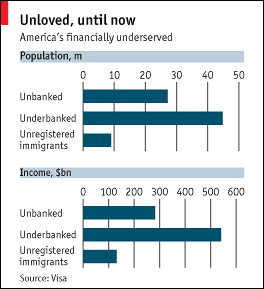 At university one professor cautioned me not to quote so much from The Economist and another professor advised me to keep on reading The Economist. I chose to take the advice of the latter. It’s quite remarkable the number of posts in the bloggersphere that comments about either The Economist or links to its articles. Here’s a sample; Economist Advertising Tactic, Why The Economist is so successful, Cross-Country Relationship Between Wage and Price Inflation, How to Save The Economist and The Journal from Irrelevance, The Design Evolution of The Economist, Facts from the Economist, Lunch with Finance Editor, Burgernomics- a favourite of bloggers, academics and radio stations. Former staff turned bloggers- Chris Anderson and Keith Hart.
Keith Hart, an anthropologist credited three years at The Economist for for teaching him to not only talk about economics as if he knew what he was talking about, but also to do so with unwavering confidence and assurance. Be sure to check The Economist’s style guide.
Iraq's trade unions;According to the Iraqi Workers' Federation (IWF), more than 2,000 of its members have been killed as a direct result of the economic scorched-earth policy waged by the insurgency.
Galbraith Obituary; A decade ago, Mr Galbraith lamented that old age brought an annoying affliction he called the “Still Syndrome”. People would constantly note that he was “still” doing things: still “interested in politics” when he showed up at a meeting, “still imbibing” when he had a drink and “still that way” when his eyes lit up on seeing a beautiful woman. The Still Syndrome lasted an immodestly long time. Its passing has left America poorer
Health in America and Britain; Americans spend far more on health care than the inhabitants of other rich countries, but their life expectancy is below the wealthy world's average. Annual medical costs, measured by the Organisation for Economic Co-operation and Development using purchasing-power parities, which take account of price differences, amount to $5,635 per person in America compared with $2,231 in Britain. Yet an American's life expectancy at birth is 77.2 years compared with 78.5 for a Brit
Iran and the Bomb; He has been greatly helped by the rise in oil prices—propelled, in part, by the worries about Iran. The country's oil revenues for the Iranian year that ended in March were in the region of $50 billion, nearly twice the figure of two years earlier.
Petrol Prices; Many Americans are furious at high petrol prices, but low taxes mean that they get a better deal at the pump than motorists do in most other countries. High taxes make Turkey the most expensive place to fill up, followed by Norway and Britain. The IMF says that higher gasoline taxes in America, which consumes a quarter of the world's oil, would help to curb excessive consumption
Metal prices continue to soar. Copper, nickel, zinc and platinum have all hit record levels. Copper has risen by 60% so far this year; nickel by 45%. Gold is at a 25-year high; silver, a 23-year high
Alternative energy; The notion of American farmers defying the tide of capitalism to grow their own fuel is a glorious delusion. But Mr Schweitzer is right that Congress has some big decisions to make about biofuels. To what extent, if any, should government subsidise this nascent industry? Already it has received plenty of help. Ethanol producers get a tax credit worth 51 cents a gallon, much to the delight of industry powerhouses such as Archer Daniels Midland. There is also a 54 cents-a-gallon tariff on imports of ethanol from Brazil
Japanese toys; Toys that help people to relax have also boosted sales. Primo Puel, a cuddly doll version of a five-year old boy, is fitted with sensors and five levels of happiness, can talk a bit and needs care. It has been a big hit with women over 40, whose own children have left home. “Little Jammer”, a toy jazz band, is also a hit—this time with men. Hidamari no tami (sunshine people), plastic dolls with simple smiley faces, are hot, not just in Japan but in America too. Other local successes include Sega's Homestar Planetarium, which brings the wonders of the night sky into the living room
Flight 93; The film has stirred an angry debate. Isn't Hollywood hijacking the hijacking for its own money-grubbing purposes? Isn't life hard enough without watching people hurtle to their death in a metal tube? And—the most insistent question of all—isn't it too soon for America to relive the horror of September 11th? Trailers for the film were greeted with boos in New York and Los Angeles, and were subsequently pulled. Fully 60% of people tell pollsters that they will not see the film.
Microsoft; The business and regulatory challenges facing Microsoft are related, because the firm needs to be free to compete against rivals in nascent markets on the one hand, yet almost anything it does will invite antitrust concerns on the other. Microsoft's Internet Explorer holds roughly 85% of the market, while the rival Firefox browser boasts 10-15%. But Microsoft lags behind in search. Worldwide, Google has around 50% market share, Yahoo 28% and Microsoft's MSN 13%. The stakes are huge: online advertising in America, today estimated to be worth $12.5 billion, is expected to double by 2010.
Americans Without Bank Accounts; In America at least 12m households have no bank account—are “unbanked”, in the industry's ugly jargon. Once unnaturalised immigrants and the “underbanked”—an even uglier term for those with a low credit score or none—are added, some estimates exceed 40m.
Quantum Computing; Quantum theory allows subatomic particles to exist in more than one state simultaneously, a phenomenon known as superposition. An electron, for example, has a property called spin that can be “up” or “down”—or a bizarre combination of the two. Using the spin of an electron to represent a bit of data would allow it to be both up and down (ie, zero and one) at the same time. Instead of being a bit it is, in the jargon, a qubit
Current Account Balances; Spain's current-account deficit is bigger than America's, relative to the size of the Spanish economy, and it is deteriorating faster. But Spain is in no danger of suffering a run on its currency, which it shares with 11 other countries. Switzerland's current-account surplus, of more than $50 billion, reflects depressed investment rates in the country. Swiss savers are pursuing more lucrative opportunities abroad
Canadian Economy; On April 27th, Mr Harper announced a surprise settlement of a protracted trade war with the United States over softwood lumber….In 2002, for the fourth time since 1982, the United States levied countervailing duties on exports of wood from Canada, its partner in the North American Free Trade Agreement (NAFTA). The American government has mainly failed to persuade NAFTA (and other) panels of its case that Canada subsidises lumber. …But Mr Harper is eager to improve relations with George Bush's government. After a week of talks, both sides agreed a draft deal which in essence returns to the previous regime of managed trade. The Americans will drop the sanctions, and return $4 billion of the $5 billion they have collected in duties. Canada accepted that its share of the American market be capped at 34%. It agreed to impose export taxes and limit shipments if prices in the United States fall much below their current—unusually high—levels. ….Philip Cross, the chief economist of Statistics Canada, reckons that while Americans are paying over 70% more for gasoline than three years ago, prices in Canada are up by only about a third.
French Corruption; The story orginates in a judicial investigation, launched in 2001, into kickbacks, linked to the 1991 sale of six French frigates to Taiwan, that were allegedly channelled through Clearstream accounts.
City of London’s History; AT THE end of the 19th century, an intrepid social scientist visited Stockwell, in south London. He was involved in an ambitious project, led by the shipping magnate Charles Booth, to colour-code every street in the capital according to its social make-up. In general, the area struck him as comfortable. But just east of Stockwell Road he found a pocket of filth and squalor, with rowdy residents and broken windows. It was, he believed, “far the worst place in the division”.
MUSIC company bosses always get a terrible rap…In contrast to many fellow execs, Mr Iovine has musical talent. And although he works for Universal Music Group, the biggest music firm in the world, which is in turn owned by Vivendi, a French conglomerate, artists regard him as much more than just another “suit”. Rappers have even incorporated Jimmy Iovine approvingly into their lyrics. Mr Iovine has street credibility. And—ironically enough—that may be the key to his success as a businessman.
A discussion with Andreas Kluth, Technology Correspondent of The Economist;
“In the participatory era, media will no longer be delivered one way from a media company to an audience...but by audience members to other audience members. The distinction between content creators and consuming audiences first gets blurry and then disappears completely...Instead of media being delivered as a sermon or lecture, it becomes a conversation among the people in the audience”
May 6, 2006
British Empire and Astronomy
From the latest ‘In Our Time’, BBC podcast series;
“The 18th century explorer and astronomer James Cook wrote: 'Ambition leads me not only farther than any other man has been before me, but as far as I think it possible for man to go'. Cook's ambition took him to the far reaches of the Pacific and led to astronomical observations which measured the distance of Venus to the Sun with unprecedented accuracy.
Cook's ambition was not just personal and astronomical. It represented the colonial ambition of the British Empire which was linked inextricably with science and trade. The Transit of Venus discoveries on Cook's voyage to Tahiti marked the beginning of a period of expansion by the British which relied on maritime navigation based on astronomical knowledge.
How had ancient trade routes set a precedent for colonial expansion? What was the link between astronomy and surveying? What tools did the 18th and 19th century astronomers have at their disposal? And how did the British justify their colonial ambition and scientific superiority?”
Contributors; Simon Schaffer, Professor in History and Philosophy of Science at the University of Cambridge, Kristen Lippincott, former Director of the Royal Observatory, Greenwich, Allan Chapman, Historian of Science at the History Faculty at Oxford University.
A related webcast; ‘Science at Oxford in the 17th Century- Boyle, Hooke and others’ by Allan Chapman.
April 28, 2006
Quote for Reflection
 “Aware adults with autism and their parents are often angry about autism. They may ask why nature or God created such horrible conditions as autism, manic depression, and schizophrenia. However, if the genes that caused these conditions were eliminated there might be a terrible price to pay. It is possible that persons with bits of these traits are more creative, or possibly even geniuses… If science eliminated these genes, maybe the whole world would be taken over by accountants.”
- Temple Grandin, quoted in ‘An Anthropologist on Mars’ p.292, by Oliver Sacks
Autism didn’t prevent Temple Grandin living a full life, completing a Ph.D in animal science and becoming an accomplished author and researcher. When actor Dustin Hoffman researched his role in the movie "Rain Man," he came to her for advice.
For Comment : I’m a great fan of Howard Gardner’s multiple intelligence theory. It seems to me that a lot of autistic people are great visual thinkers.
Related Links:
- Temple Grandin interview at NPR discussing Animal Behavior and autism
- BBC All in the Mind discussion on latest autism research
- Blogs covering autism issues; Autism Diva, Mind Hacks, Neurodiversity Blog
- Autism Spectrum Disorder- a podcast discussion at Radio National
Labour Disputes and other Free Reads from the latest Economist

- Rex Tillerson, the new head of Exxon Mobil
- America's National Football League - a business lesson to other sports
- Economics focus- Would a second Plaza agreement make sense?
- Shin Sang-Ok, film director and abductee
- China is a big economy, but still a poor one
For Comment: How Does Magazines decide which articles to give away freely?
April 24, 2006
Corruption quote of the day
 “I am completely mystified by just what your problem is....People who deal with the arms trade, even if they are sitting in a government office...day by day carry out transactions knowing that at some point bribery is involved. Obviously I and my colleagues in this office do not ourselves engage in it, but we believe that various people who are somewhere along the train of our transactions do. They do not tell us what they are doing and we do not inquire. We are interested in the end result.”
- the reply of a British army chief to a query from Britain’s ambassador in Venezuela as to whether the government was prepared to tolerate bribery in arms deals.
Such facts and more others ( British royal family received more than £1 million in farm subsidies from the European Union) are being revealed since introduction of Freedom of Information Acts around the world.
Related Links:
- Bibliography of Access to Information Resources
- Governance Organizations Directory
- The cost of the ERM Cirsis- UK Treasury
April 23, 2006
Stolper-Samuelson is Dead

NBER has a major new book coming up of which Sebastian Mallaby says;
“A formidable team of economists directed by Berkeley's Ann Harrison is about to come out with a volume titled "Globalization and Poverty"; a central message is that free trade works best for countries with labor mobility. For example, India's dramatic trade liberalization in the 1990s produced equally dramatic strides against poverty. But because Indian workers move surprisingly little between industries and regions, people in sectors that contracted as a result of the lifting of tariffs were trapped. Liberals who seek to "soften" trade deals by writing mobility-restricting labor regulations into them need to rethink their strategy.”
The main findings of the book are summarized below;
- The first conclusion of this essay is that such a simple interpretation of general equilibrium trade models is likely to be misleading.
- Second, the evidence suggests that the poor are more likely to share in the gains from globalization when there are complementary policies in place. Such complementary policies include investments in human capital and infrastructure, as well as policies to promote credit and technical assistance to farmers, and policies to promote macroeconomic stability.
- Third, trade and foreign investment reforms have produced benefits for the poor in exporting sectors and sectors that receive foreign investment.
- Fourth, financial crises are very costly to the poor.
- Finally, the collected evidence suggests that globalization produces both winners and losers among the poor. The fact that some poor individuals are made worse off by trade or financial integration underscores the need for carefully targeted safety nets.
The talk of a fairer globalization has become something of fad these days starting with the ILO report , “A fair globalization - Creating opportunities for all”. Stiglitz summarizes the report in this op-ed saying,
“The Commission highlights other issues that have received insufficient global attention - such as tax competition among developing countries, which shifts more of the tax burden from business to workers. In still other areas, the Commission's report argues for more "balanced" perspectives. On exchange rates, for example, it is more sympathetic towards mixed systems - in contrast to the traditional belief that countries must choose between the extremes of a completely flexible system and a hard peg (of the kind that contributed so importantly to Argentina's woes).As this example shows, bringing different voices to the table in discussions of globalization brings new perspectives. Until now, the main worry for most experts on globalization has been excessive government intervention in the economy. The Commission fears just the opposite. It argues that the state has a role to play in cushioning individuals and society from the impact of rapid economic change.”
Go and comment on the NBER book before it is published. I stole the title of the post from one of the chapters of the book.
Related Links:
- Rybczynski Theorem 50th Anniversary
- Heckscher-Ohlin: Flaws, fixes and future
- Glossary and Family Tree of Trade Economics
- Taming Global Capitalism Anew
- TRADE AND DEVELOPMENT REPORT 2005, UNCTAD
- Poverty, inequality & globalization; miscellaneous links
April 19, 2006
Free Reads and Book Forums
A couple of links to free reads.
- The Wealth of Networks (via Lawrence Lessig)
- Beyond the European Social Model; a related podcast on the book
- Discretionary Time: A New Measure of Freedom
- Open Macro in Developing Countries
- The latest Cato Journal- (including articles Does Foreign Aid Help, Corruption and Human Development and book reviews of Undercover Economist and The Moral Consequences of Economic Growth)
Webcasts
- Is Globalization Here to Stay
- The World Is Flat: A Brief History of the Twenty-First Century
- History Matters: Development for the 21st Century
- The World's Banker: A Story of Failed States, Financial Crises, and the Wealth and Poverty of Nations
- Book TV’s In Depth
- Oil: Anatomy Of An Industry (a podcast from Radio National’s Book Show)
- Accidental President of Brazil
- Book Forums from University Channel
Across the econ blogosphere two people have been busy providing us links to some of these free reads; New Economist and Ben Muse. Thank you very much for both of them.
April 1, 2006
A Carnival of Podcasts for the Weekend
The Beautiful Mind…some recent fascinating insights into the causes and risk factors for schizophrenia. And young woman tells of her lonely battle to tame her fragmented mind.
Seafood and the Mind…some remarkable findings from a British study looking at the effect of giving fish oil supplements to children with ADHD and learning difficulties. And the figures showing significantly lower depression rates in countries which eat lots of seafood may give you an idea for tonight’s dinner!
A Mother's Nightmare…A baby is dead. A mother is in jail. She maintains her innocence. A seven-year-old may be to blame.
House Design and Violence … Architect Claire Bennett says the way we design our modern houses is encouraging violent behaviour.
How design drives capitalism…Professor Robert Reich in his book The Future of Success outlines how our unfulfilled desires drive capitalism.
Microsoft and the Australian tribe… Anne Kirah is an anthropologist, her skill honed by fieldwork in immigration centres. Now she works for Microsoft as chief anthropologist.
The changing role of government… Shadow Finance Minister Lindsay Tanner of Australia
China: innovation and productivity
Literary animals- ending the debate of nature versus nurture
Trust and charities… Don D'Cruz has been casting a critical eye on the aid industry for some years, at first when he worked with the Institute of Public Affairs, and now as an independent commentator.
Governing by Network … Back in the 1980s there was a wave of changes to governments – increasing privatisation and outsourcing, a new recognition that governments didn't actually have to deliver all the services for which they accepted responsibility. Bill Egger's book Governing by Network seeks to take this process much further and has gradually been gathering a reputation as something of a signpost to the future
The art of demotivation …Recent data says that people are increasingly unhappy with their jobs. The root of the problem says Dr EL Kirsten is the 'noble employee myth', the idea that if people are unhappy at work, there must be some problem with the organisation. But could it be that we all just expect too much from our work and the organisations we work with.
Private education in developing countries
Genetics of nicotine dependence
Don’t worry if you’re obsese …Research from the US suggests that the risk factors from being overweight or obese may not be as big as has been suggested
Tim Flannery, whose book The Weather Makers, has made a considerable impact around the world, explains why he is not put off by those who are unconvinced by warnings about climate change.
David Ellyard has produced a book Who Discovered What When, about the superstars of science from the past 500 years. The list is both reassuring and surprising. Who is missing? Who snuck in? Where are the Australians?
Big Ideas Are Better…The opening night debate from the 2006 Ideas Festival in Brisbane. In front of a crowd of 1600 people, six guest speakers debate the assertion that big ideas are better (than small ones).
Climate change…Meet the law professor who's off to the North Pole to focus atttention on global warming.
Criminals and privacy… Last week, in New Zealand, a convicted paedophile was awarded $20,000 for 'breach of privacy' after police distributed a leaflet bearing his photo, his address and his criminal record. Legitimate community policing or vigilantism?
Date rape…Similar fact evidence: six girls make sexual assault allegations against one boy – so should there be one trial, or six different trials? If a jury hears six different stories is that prejudicial to the accused, or is it legitimate, probative evidence?
The Life and Grimes of Rudolf Diesel- the creator of diesel engine
Fruits of War…war what’s it good for
Triangulation…Most of us know about the square on the hypotenuse, but Pythagoras’s theorem is not simply a way of computing hypotenuses. It is an emblem of the very process of proof itself.
Knowing what you didn’t know you knew … How can we acquire knowledge about anything? If you’ve already got it, you don’t need it and, if you haven’t got it, you don’t know you need it. This is one of the questions that Plato asked in his dialogue Meno …
Niall Ferguson on Islam and demographics
Latest Science Show from Radio National … disappearing tea spoons/ fish oil and brain development
Sceptical and Spooked … Inveterate sceptic, Will Storr, takes on poltergeists and Electronic Voice Phenomena to test his philosophical atheism.
The Nazi Hunters … Prosecuting fugitive Nazis has not been easy, says Ephraim Zuroff, director of the Simon Wiesenthal Centre, but the pursuit of justice is paramount, even when it’s too little too late
Globalisation Institute podcast interview with with Dan Ikenson, a Trade Policy Analyst at the Cato Institute in Washington DC. ..discusses the rising anti-Chinese feeling in the US Senate, the proposed 27.5% tariff on Chinese goods, and the issue of whether Americans should be worried about the rising US trade deficit – and whether this is sustainable.
A brand new series of podcasts from the World Bank; Urban Development and Globalization , Trade and International Development, Energy, Malnutrition and Hunger, The Rise and Fall of Nations, Business Unusual
An ex-World Banker – Bill Easterly critiques the development community and urges for independent evaluation of aid. Great speech delivered with a remarkable sense of humour and irony. (webcast)
Markets, Networks and Governments : Issues in the Debate on Global Governance
Kemal Dervis, Administrator at the UN Development Program and former Finance Minister of Turkey
Latest Bloomberg podcasts; interview with Tim O'Neill, principal at O'Neill Strategic Economics and Joseph LaVorgna , chief U.S. fixed-income economist at Deutsche Bank Securities about U.S. economic growth, global trade, China's currency and trade policies, bond yields and Federal Reserve monetary policy.
Ben Franklin: Conservative, Libertarian, or Radical Democrat ….Featuring the author, Mark Skousen, compiler and editor of The Compleated Autobiography of Benjamin Franklin.
Electing to Fight: Why Emerging Democracies Go to War
Corruption in Kenya- A Whistleblower’s Account
The Carolinian Renaissance … In 800 AD on Christmas Day in Rome, Pope Leo III proclaimed Charlemagne Emperor. According to the Frankish historian Einhard, Charlemagne would never have set foot in St Peter's that day if he had known that the Pope intended to crown him. But Charlemagne accepted his coronation with magnanimity. Regarded as the first of the Holy Roman Emperors, Charlemagne became a touchstone for legitimacy until the institution was brought to an end by Napoleon in 1806…How did Charlemagne become the most powerful man in Western Europe and how did he finance his conquest? Why was he able to draw Europe's most impressive scholars to his court? How successful was he in his quest to reform his church and educate the clergy? And can the Carolingian period really be called a Renaissance?
The Today Lecture from BBC – featuring a new series of lectures organized with the Chatham House. The inaugural lecture is by Jack Straw and Condoleezza Rice..the usual stuff defending the war with Iraq but Rice wears a little bit of her academic hat as well and sometimes very moving. Highly recommended.
The lastest program from Foreign Exchange TV – a flage ship program hosted by Fareed Zakaria. The focus is on role of NGOs, global equity markets and higher education. How have Australia managed to capture 10 percent of the world market for students seeking an English-language education? Features discussion by the likes of Sebastian Malleaby and Ruchir Sharma at Morgan Stanley.
-Please note that a lot of above podcasts are time sensitive and won't be available if you don't download now.